Twist of Lime

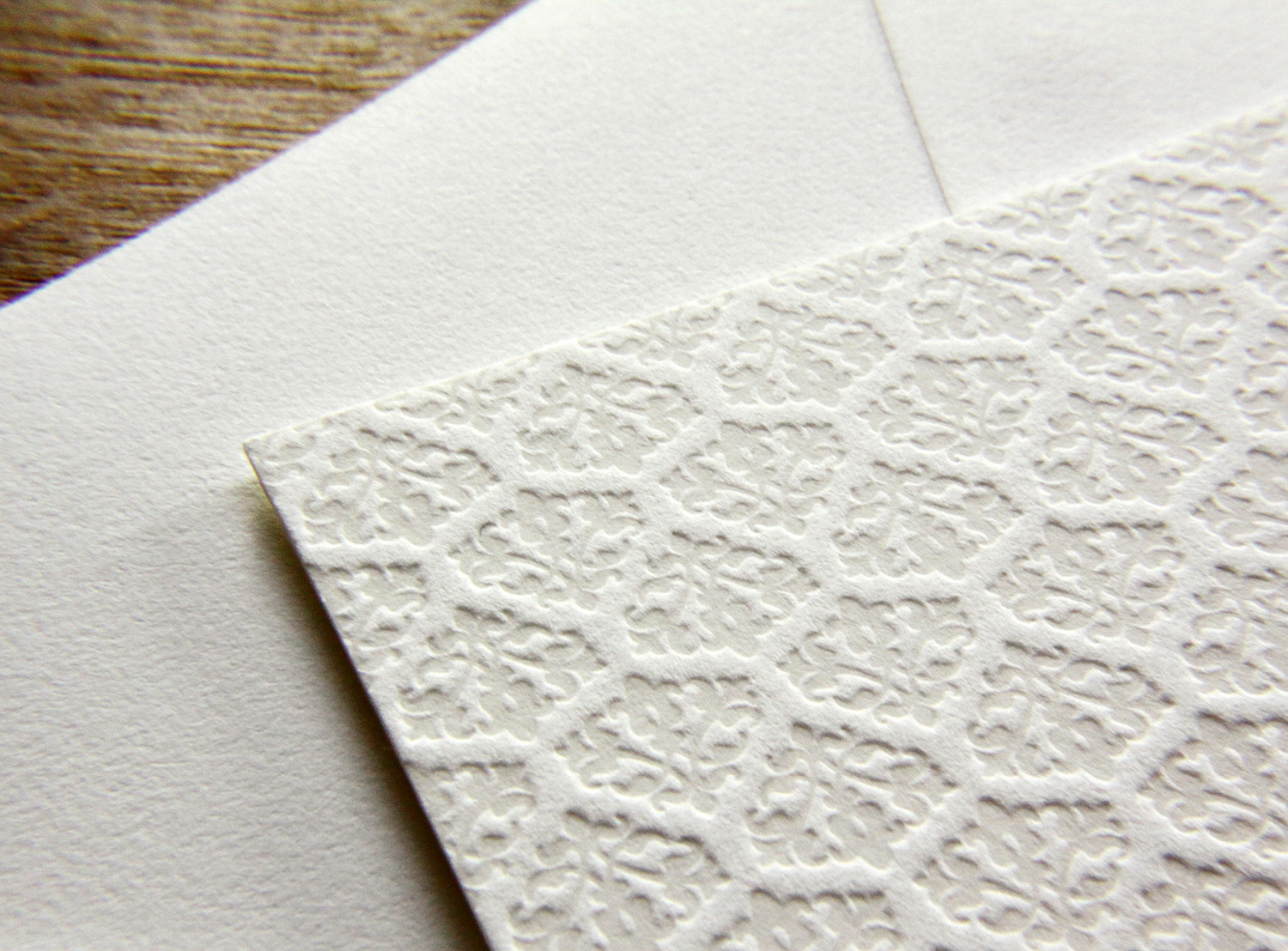
Meghan and John knew they wanted letterpress invitations for their wedding, and had even seen Parklife's work before — a friend of theirs worked with Travis and used a similar invitation design. So when it came time to plan their wedding, they were a step ahead. Based on Whirl, the design features a conventional text layout with an off-center design bleeding off the corner. The motif is also repeated on the main envelope flap, as well as the RSVP and events schedule cards.

The swirly motif, when printed in pale lime ink, becomes springy and botanical, perfect for a late-spring wedding.

Photos by Sarah McCarty Arneson
(Bar) Harbor-side Wedding

In her words, Adrien and her mother "always had a 'thing' for wedding invitations." When envisioning the big day, invitations were job one — and an important job, at that. According to Adrien: "We believe they fully set the tone for the wedding, long before the actual day arrives. They create all the anticipation for the guests in the days leading up to the party. We were willing to spend the money on custom letterpress invitations because we believe in the art of creating invitations in such an old fashioned way."

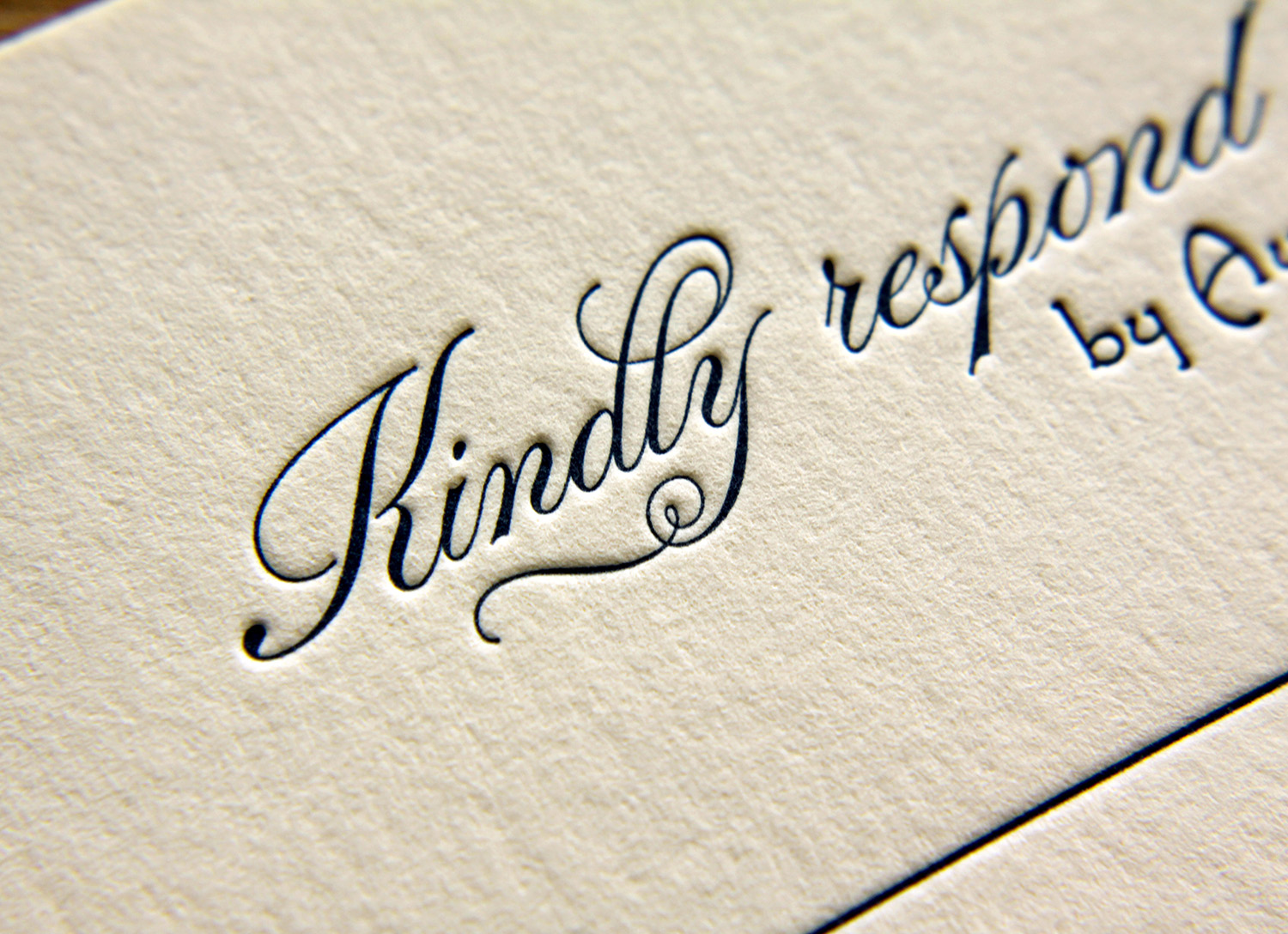
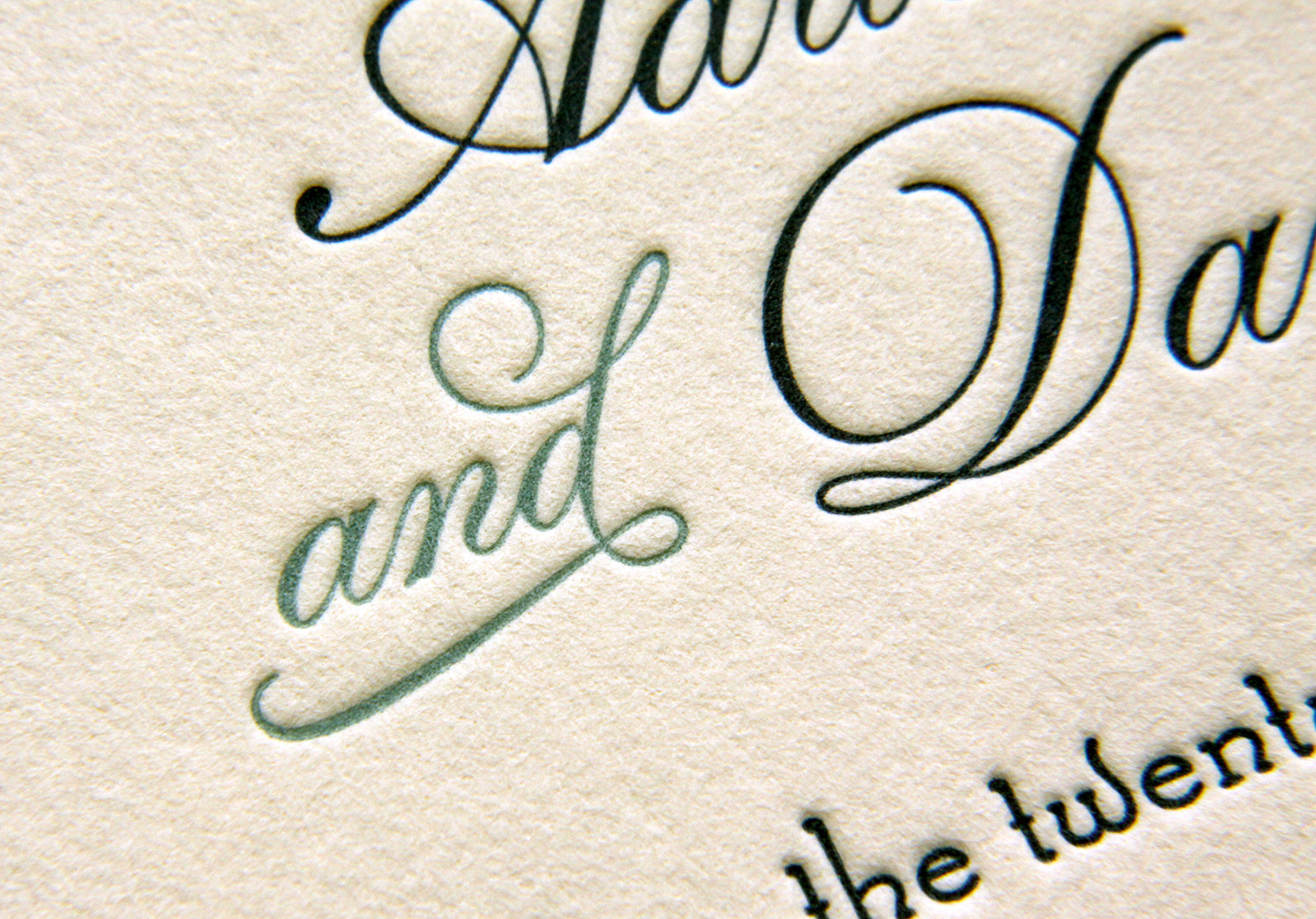
The feel for their wedding was old-fashioned, ocean-side, farmhouse. For her own invitations, she said she knew she wanted the feel to evoke a style of "simple, yet classy" and "formality, without pretentiousness." They started with the Sand Dollar design.

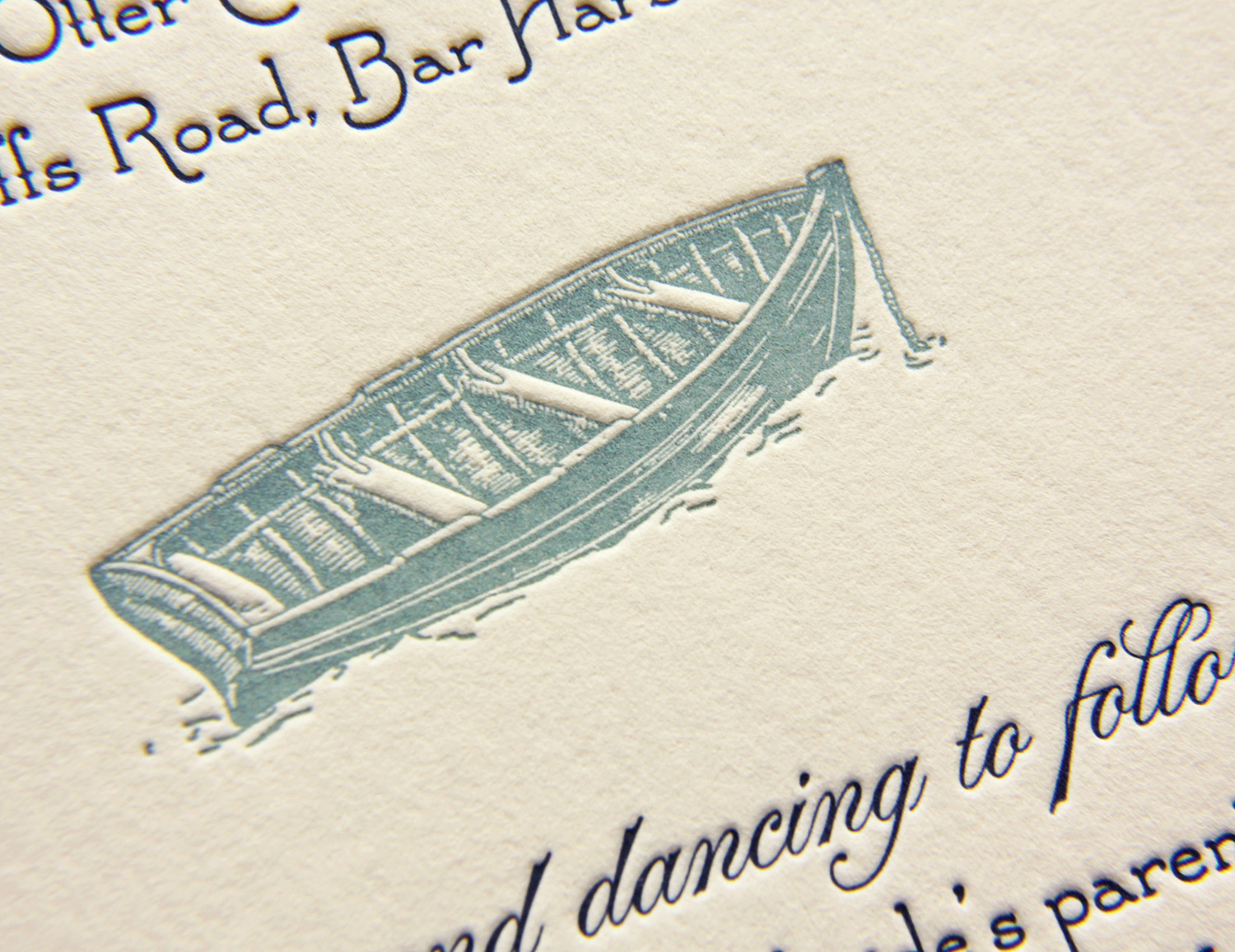
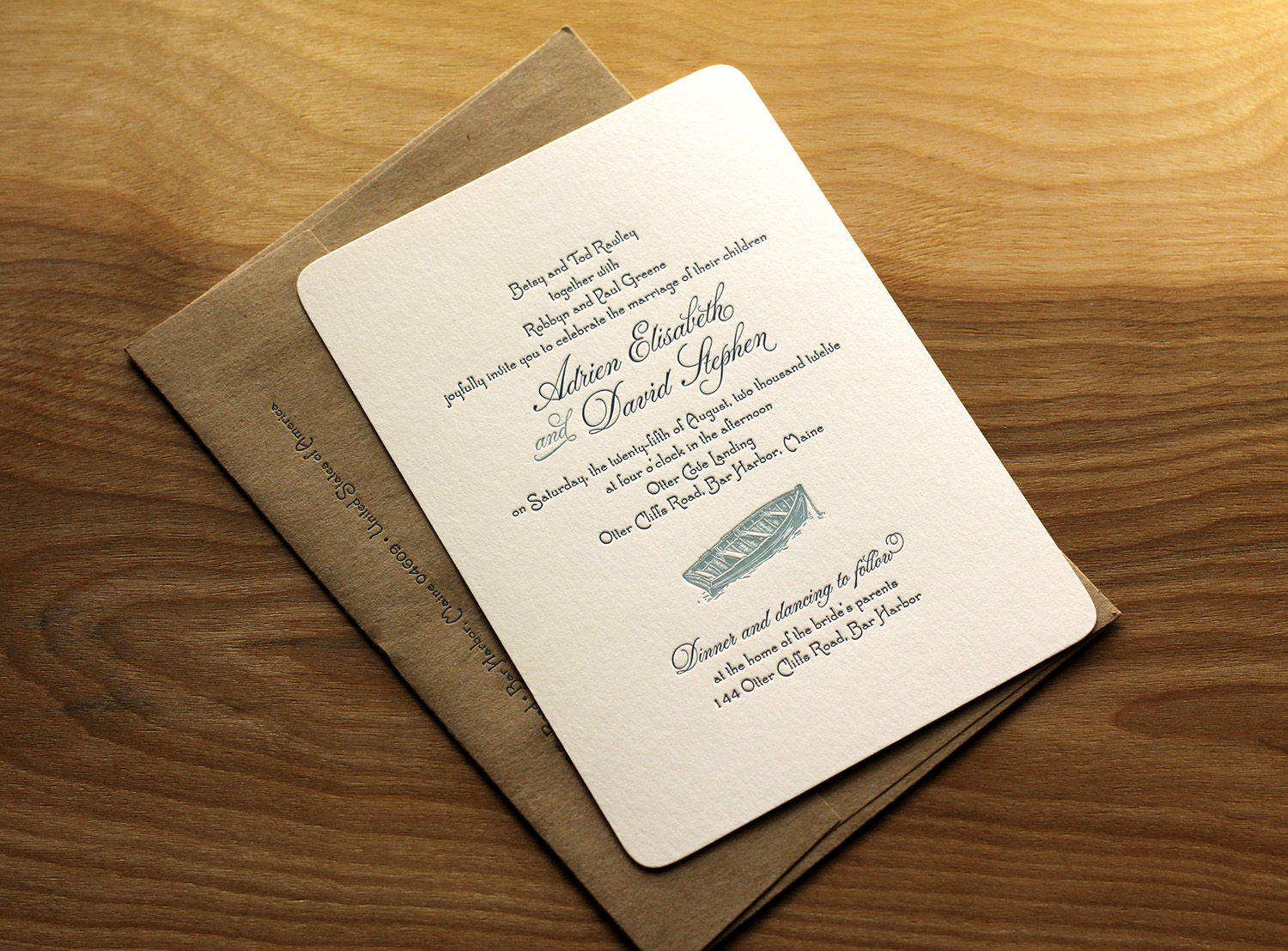
Adrien and David got married at her family's home where she grew up. It was within walking distance to the ocean, and the ceremony was held seaside. The artwork ended up being a simple choice, for in Adrien's words, "We have always been on the water, in the water, around the water.  Dave proposed in a rowboat, and we thought a dory on our invites would be a great icon for that, as well as where we were getting married." She sketched a few ideas and Travis took it from there. 

Having few letterpress options in Maine, Adrien found Parklife Press online. And the oceanside wedding was exactly as personal and distinctive as they had hoped, said Adrien. "We had a wonderful day, it was perfect."

Photos by Sarah McCarty Arneson
Timeless Black on White

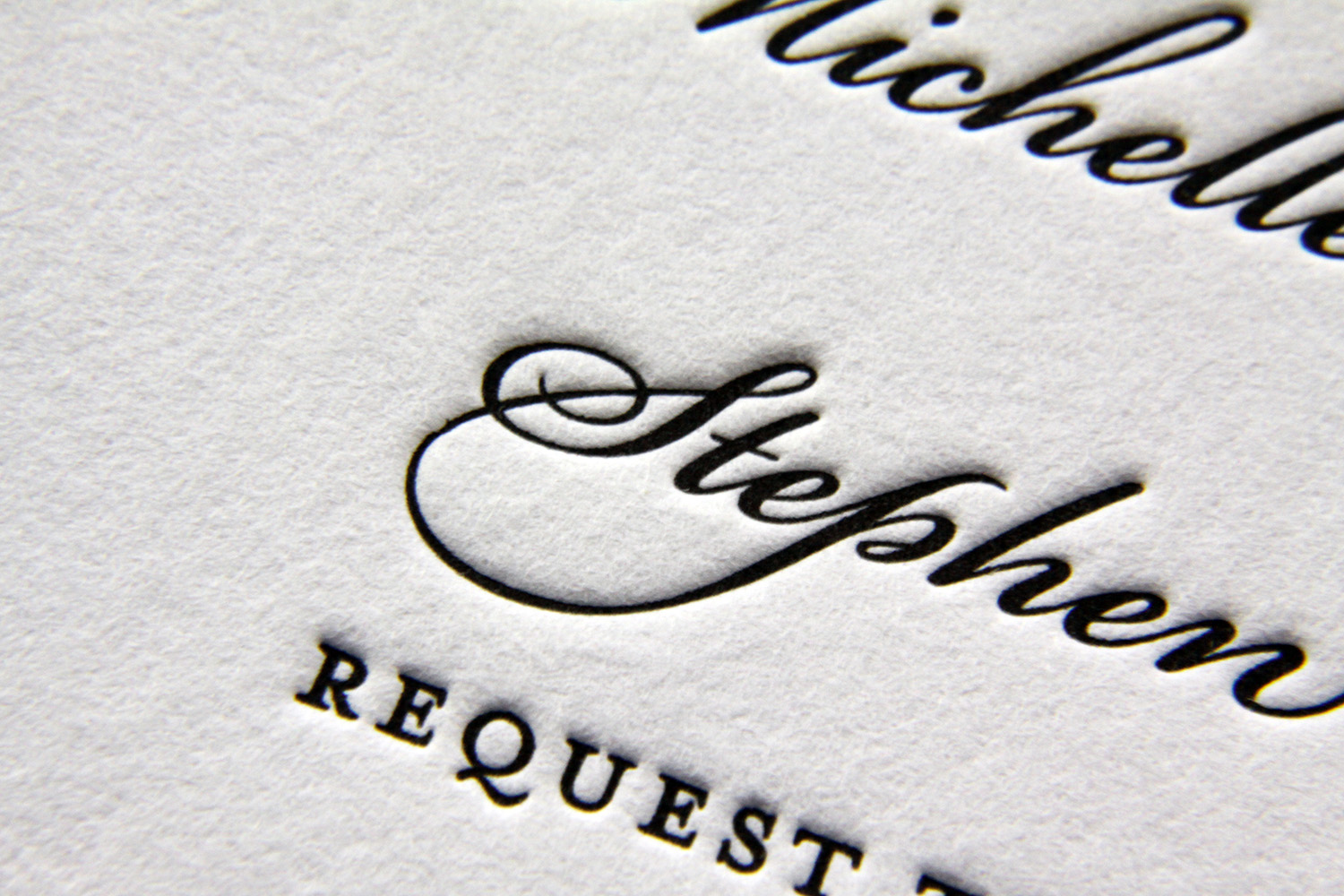
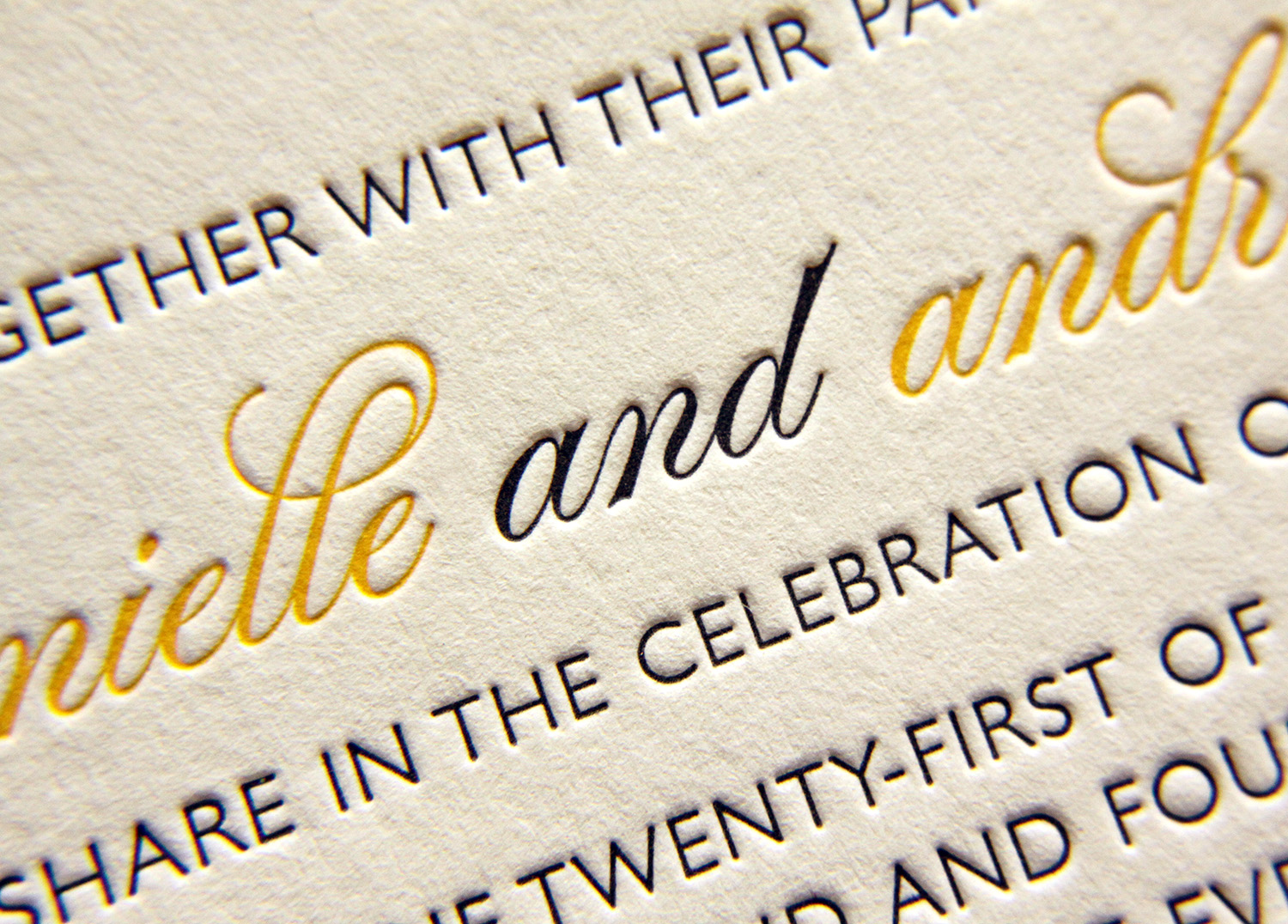
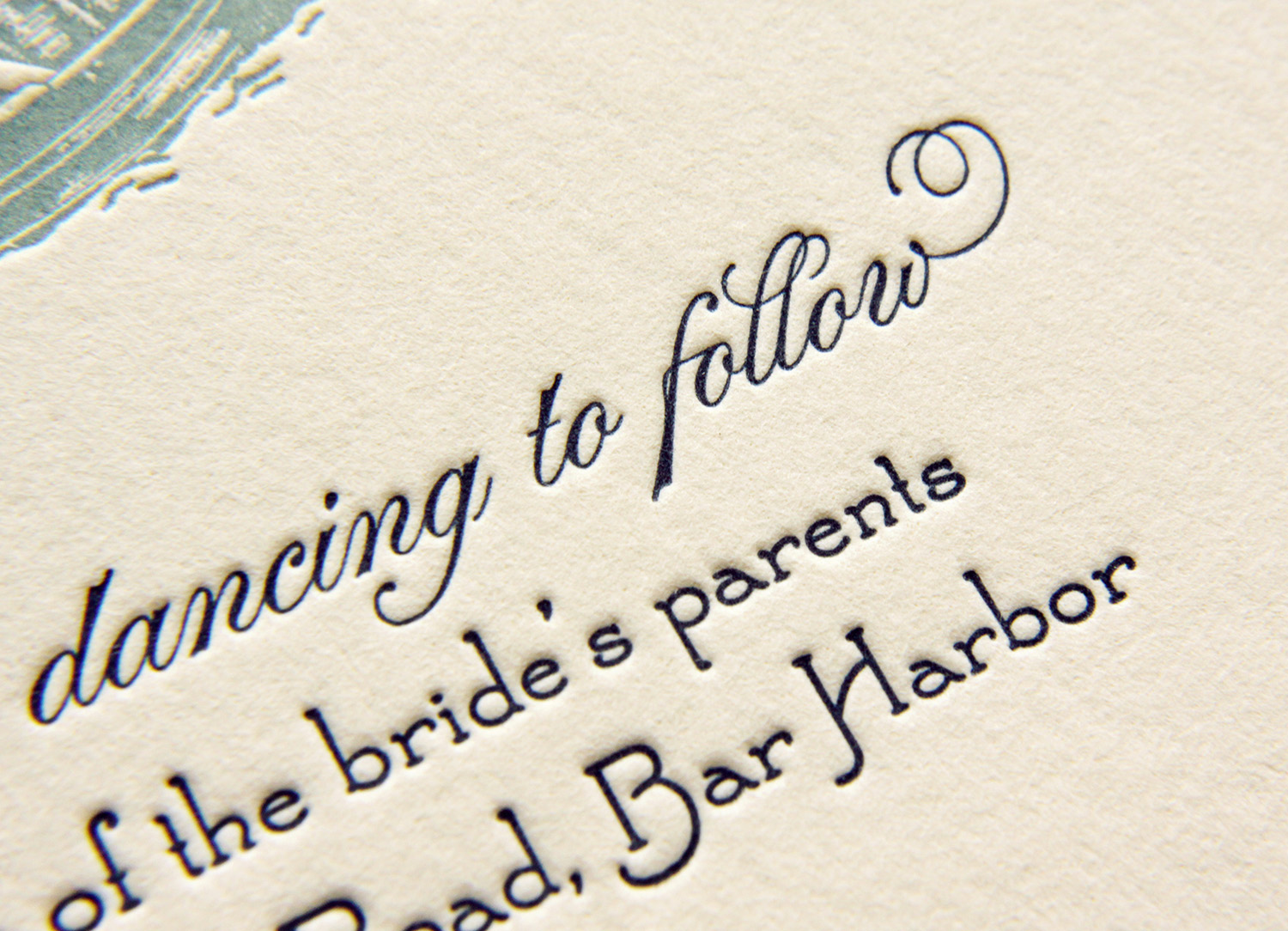
Michelle and Stephen weren't familiar with letterpress when they began planning their black tie wedding, but a love of elegant invitations had been instilled in Michelle an early age. Her grandmother used to frame beautiful invitations she received, and Michelle had always admired those with simple black calligraphy on a white note card. Parklife's Vignette fit that vision perfectly: striking black ink against bright white paper, set off and framed with a blind deboss border.

The script font had a few flourishes, with one particularly unusual and interesting one: the ligtature connecting the cursive capital "S" and "p" in Stephen's name. A classic dingbat was used to add some visual interest and to separate blocks of information. It also tied all the pieces together — it was used on the invitation, the main envelope's return address, the RSVP card, and the accommodation information card.

Photos by Sarah McCarty Arneson
Amore e matrimonio: Italiano e Inglese

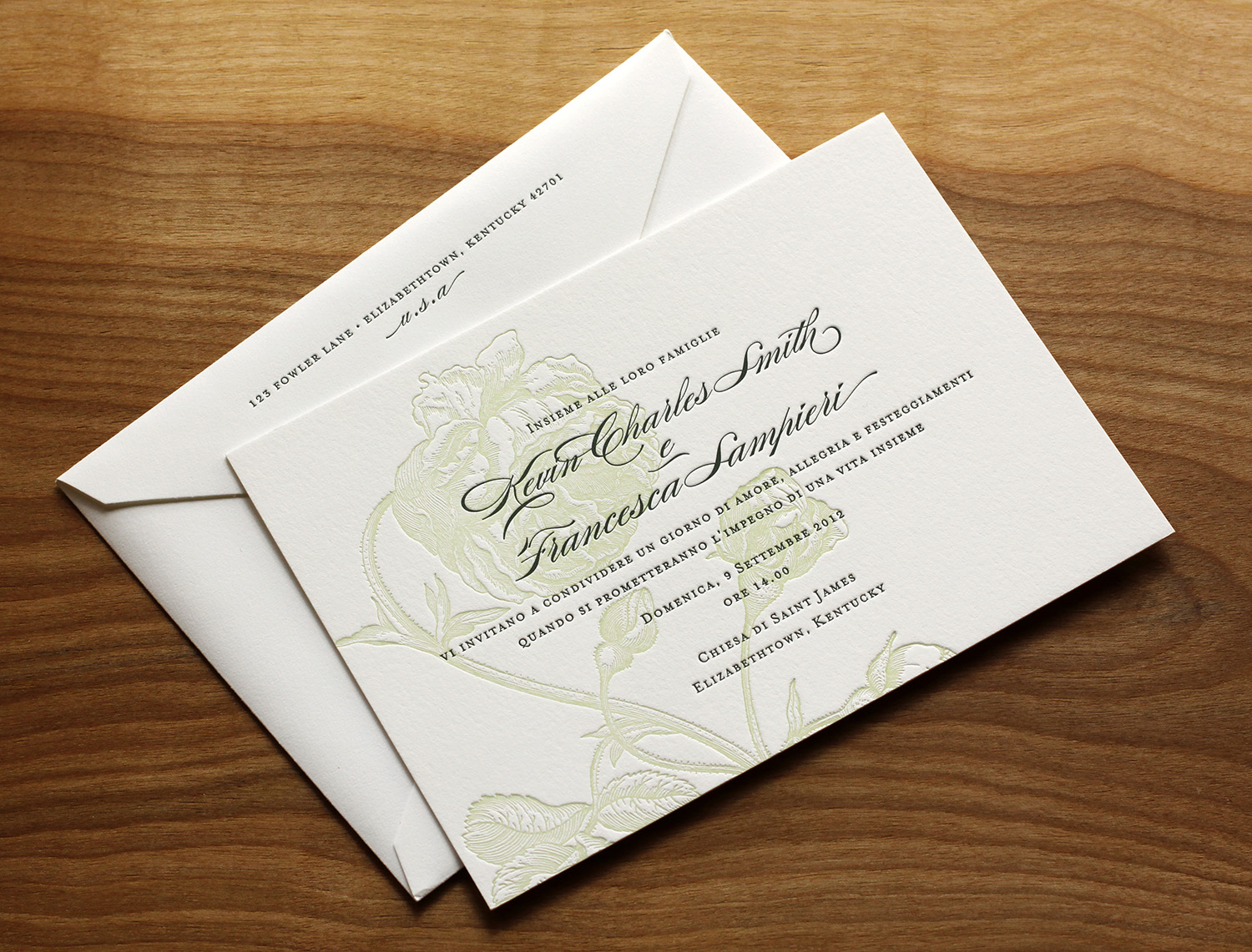
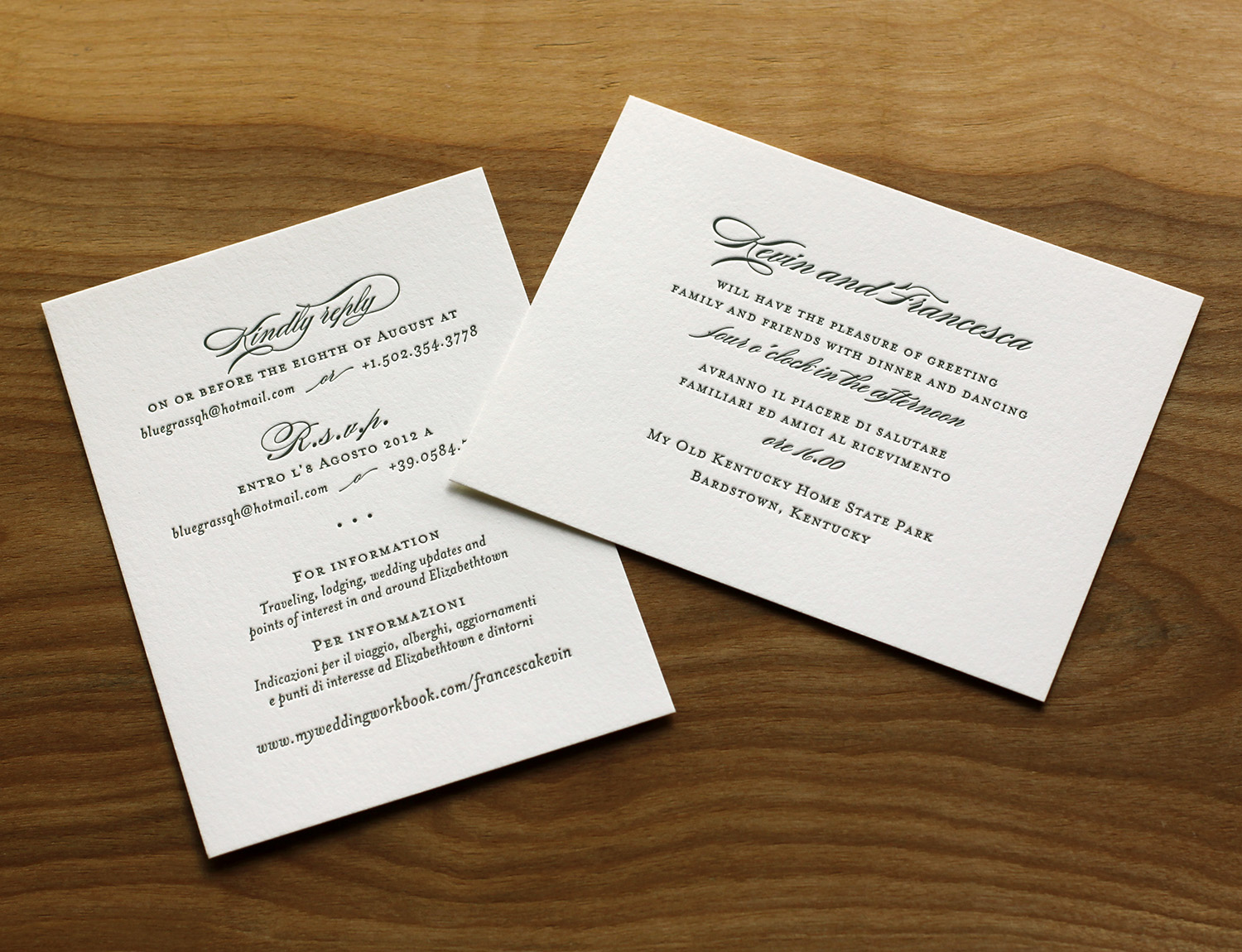
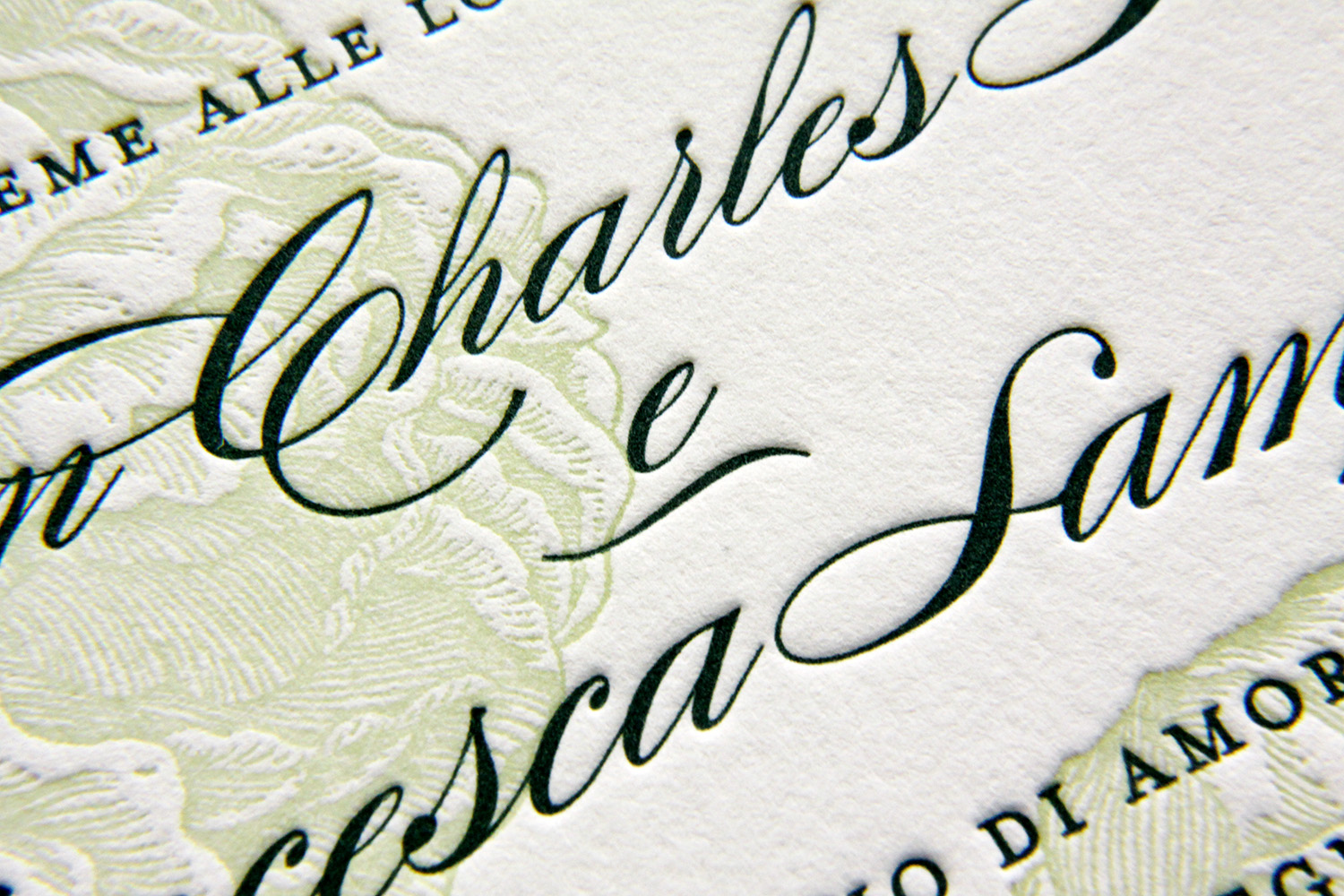
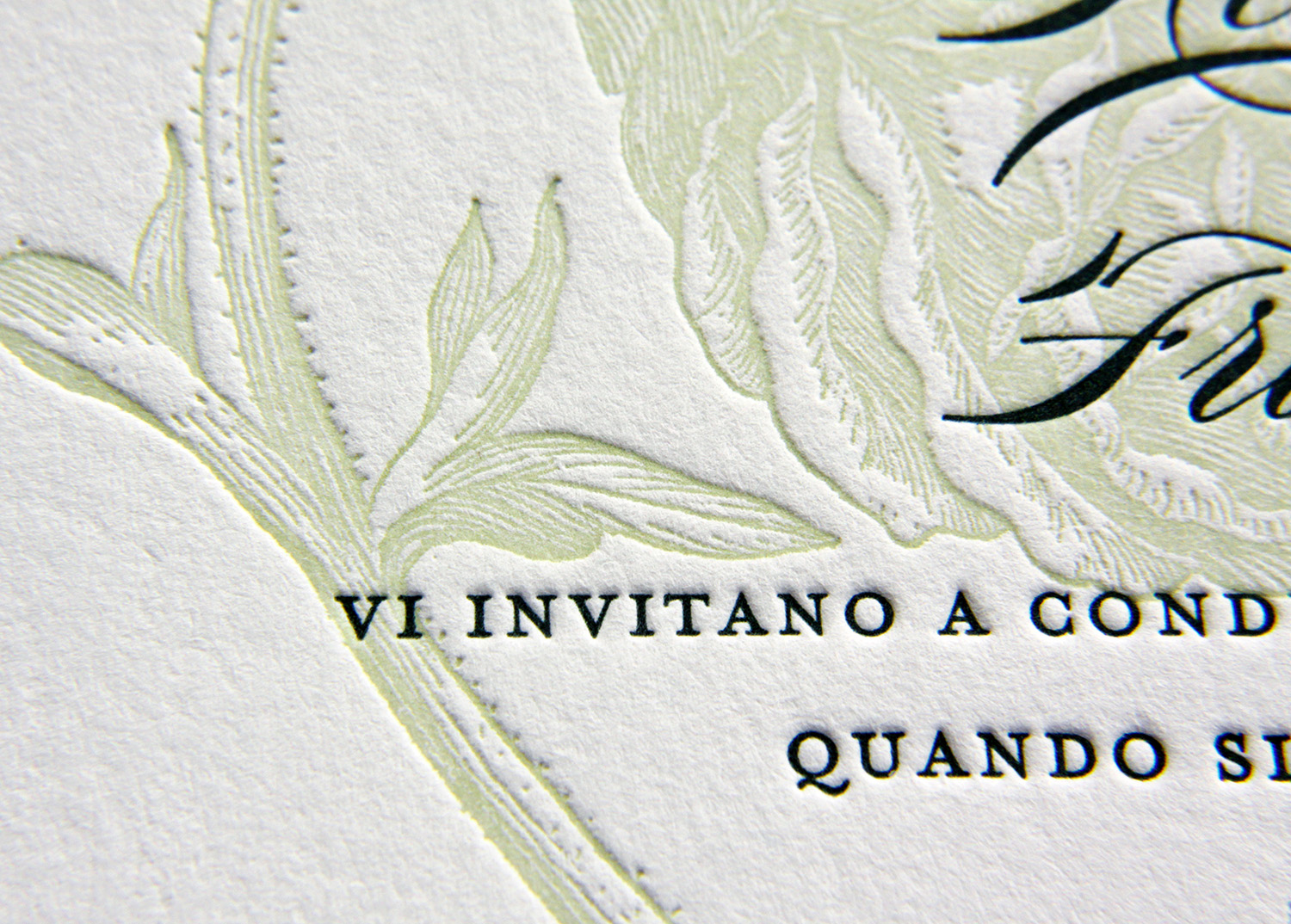
Kevin and Francesca were looking for an invitation to echo the embroidery on the bridal gown. They found what they were looking for, basing their set on Parklife's Franklin design. The springy floral motif was also reflected in the design of the wedding cake and in the floral arrangements.

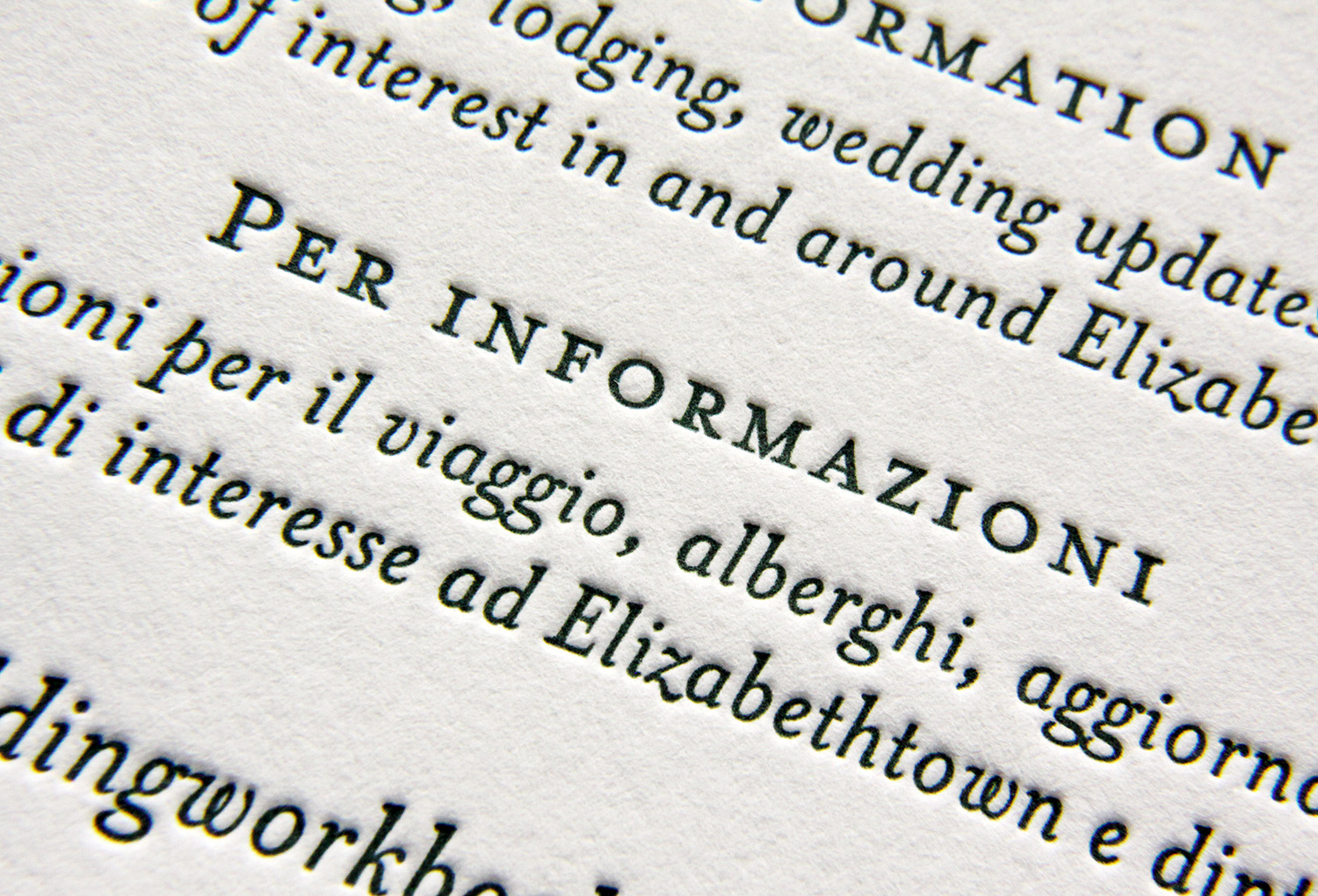
The other major requirement for the invitations was that they speak to two audiences, which had, as Francesca put it, "different traditions and etiquette requirements." The floral artwork was printed with a single plate in light celadon ink. But for the forest green text, two different plates were used — one in English and one in Italian. The enclosure cards were bilingual to speak to both audiences — one card invited guests to the reception, the other gave RSVP directions and other information. "Everyone invited, from every country we touched, made the comment that they'd never seen such a simple yet elegant touch and attention to details in the invitations."

"The invitations  for our wedding were probably one of the best things of the wedding organization," Francesca said. "We could not be any more pleased by the success of the first step of the best day in our lives. We have been recommending Parklife Press to whomever asks for refined letterpress work."

Photos by Sarah McCarty Arneson
Grand Tetons

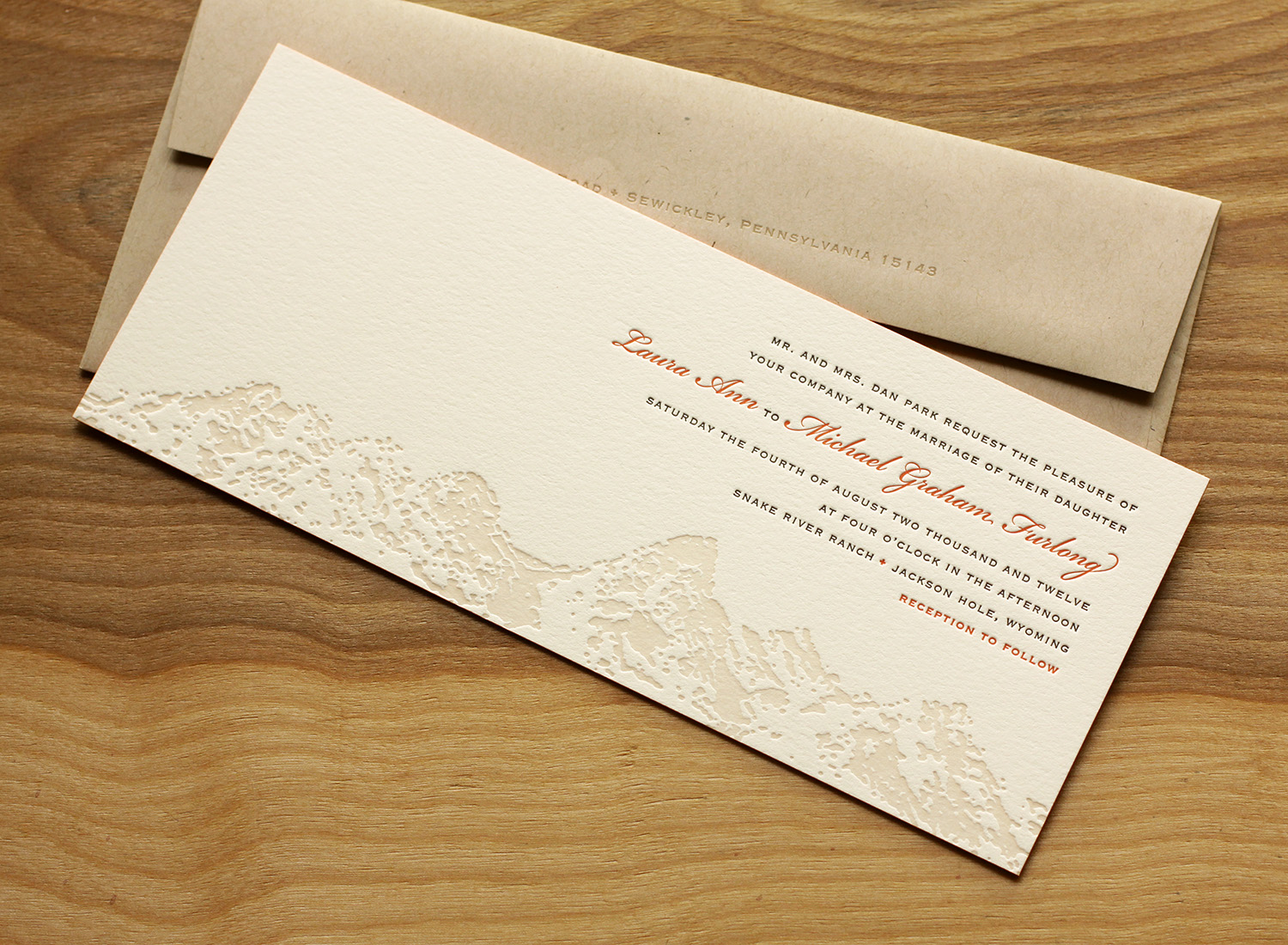
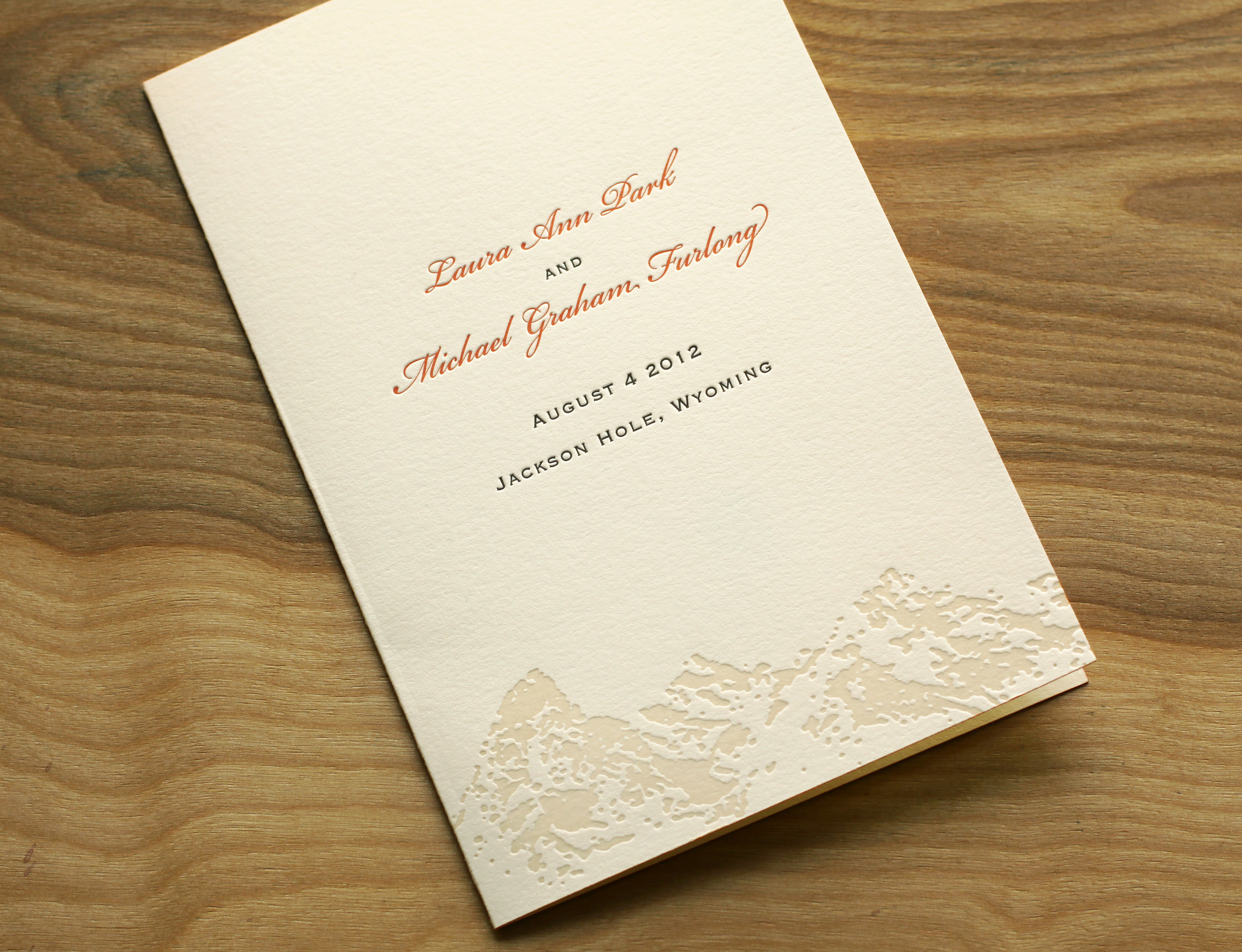
Laura and Graham love skiing and love the mountains. Both their families were very connected to Jackson Hole — a beautiful spot in Wyoming nestled in the valley of the Teton Range — and so they knew they wanted to have their wedding there. They also wanted to incorporate the famous landscape in their invitations. They loved the tea-length card because it's unusual and distinctive, and also because they knew the proportion would highlight the mountain range illustration.

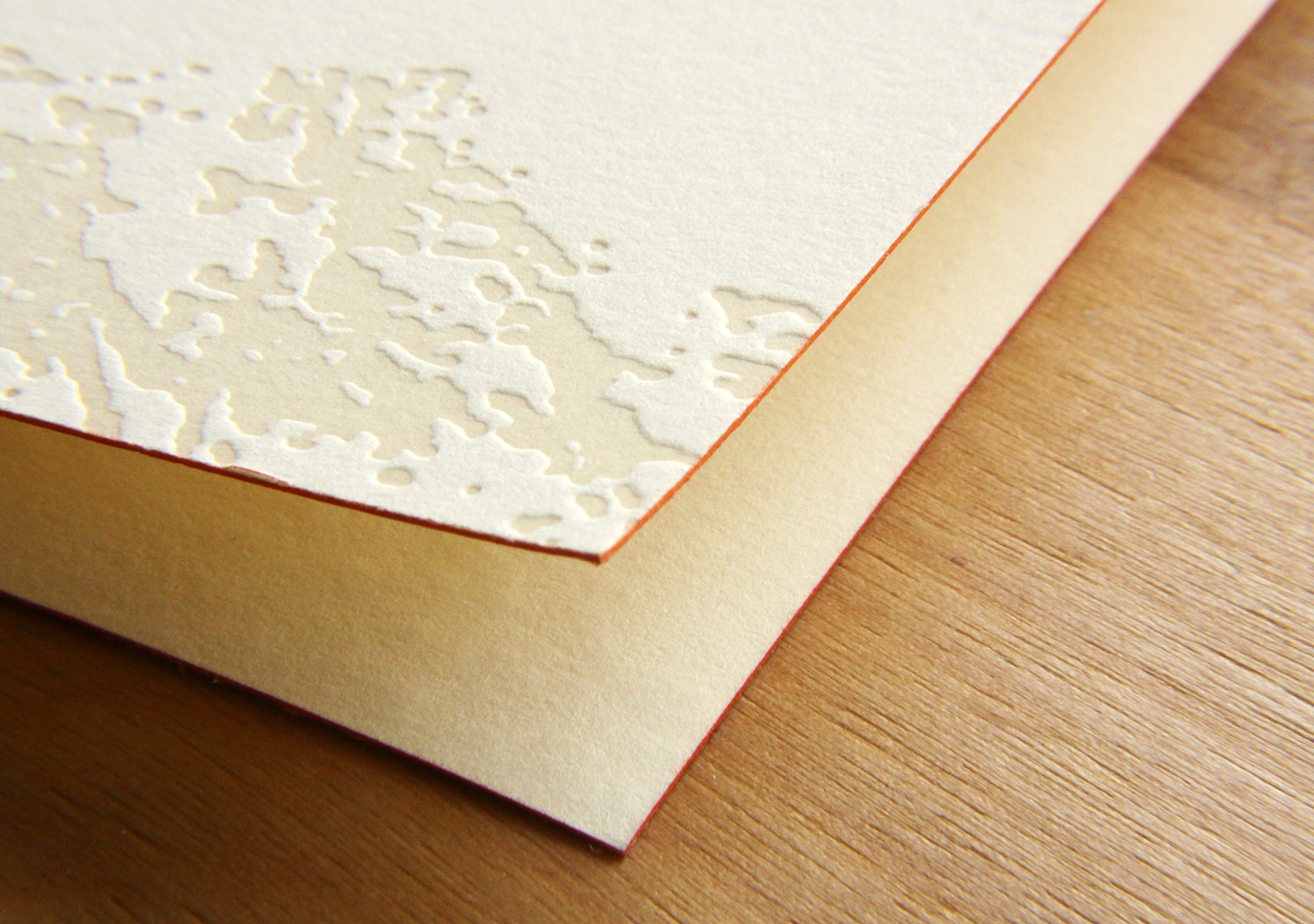
Travis worked with Laura to create the custom Teton art, and it was used on the invitation and on the program cover. Espresso and sherbet inks worked beautifully with the extra thick ecru paper, and corresponded with the wedding colors (brown was a featured color in the wedding, and the floral centerpieces had a pop of orange). The edges of the invitation card and the program cover were painted to tie together the sherbet accent ink used throughout.

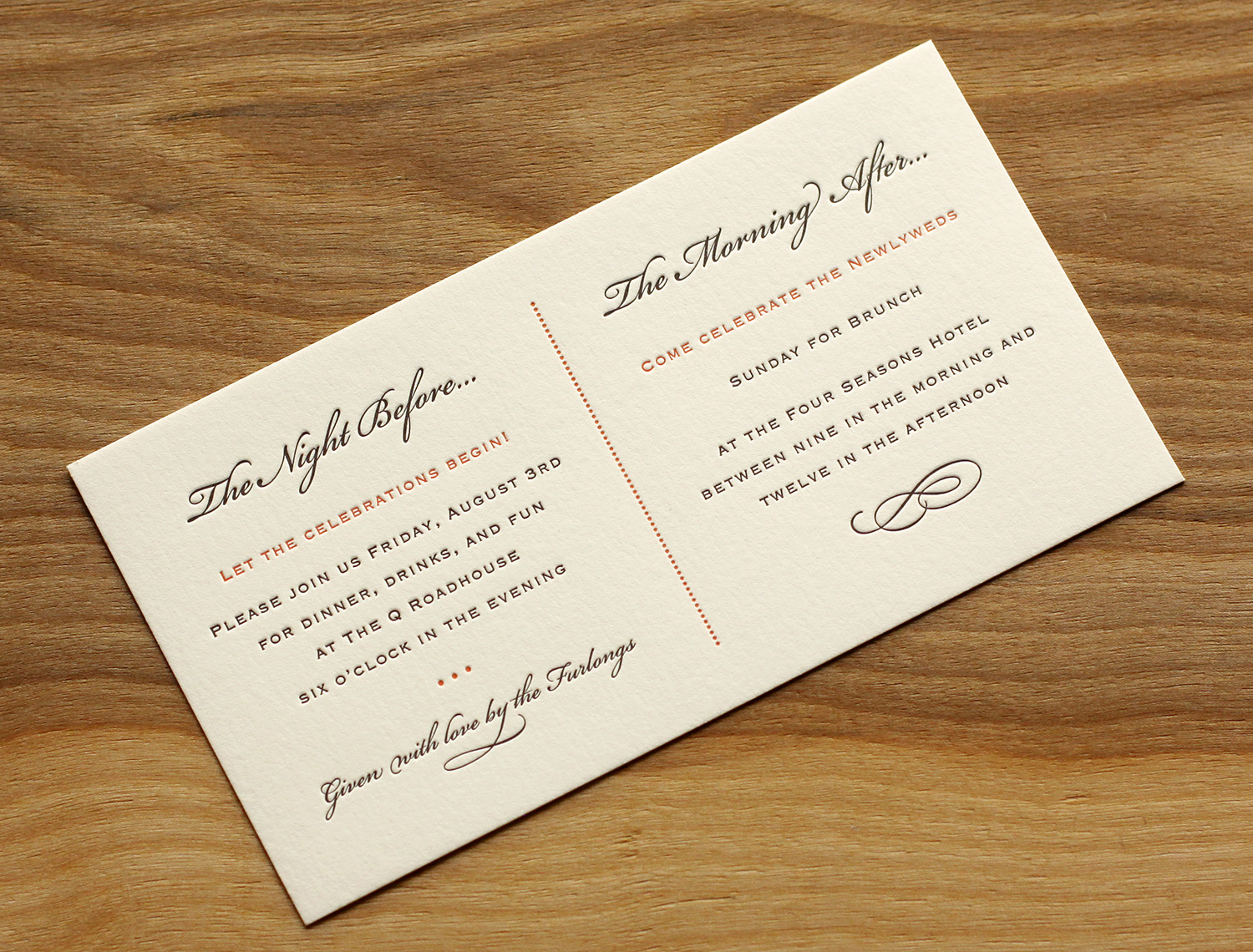
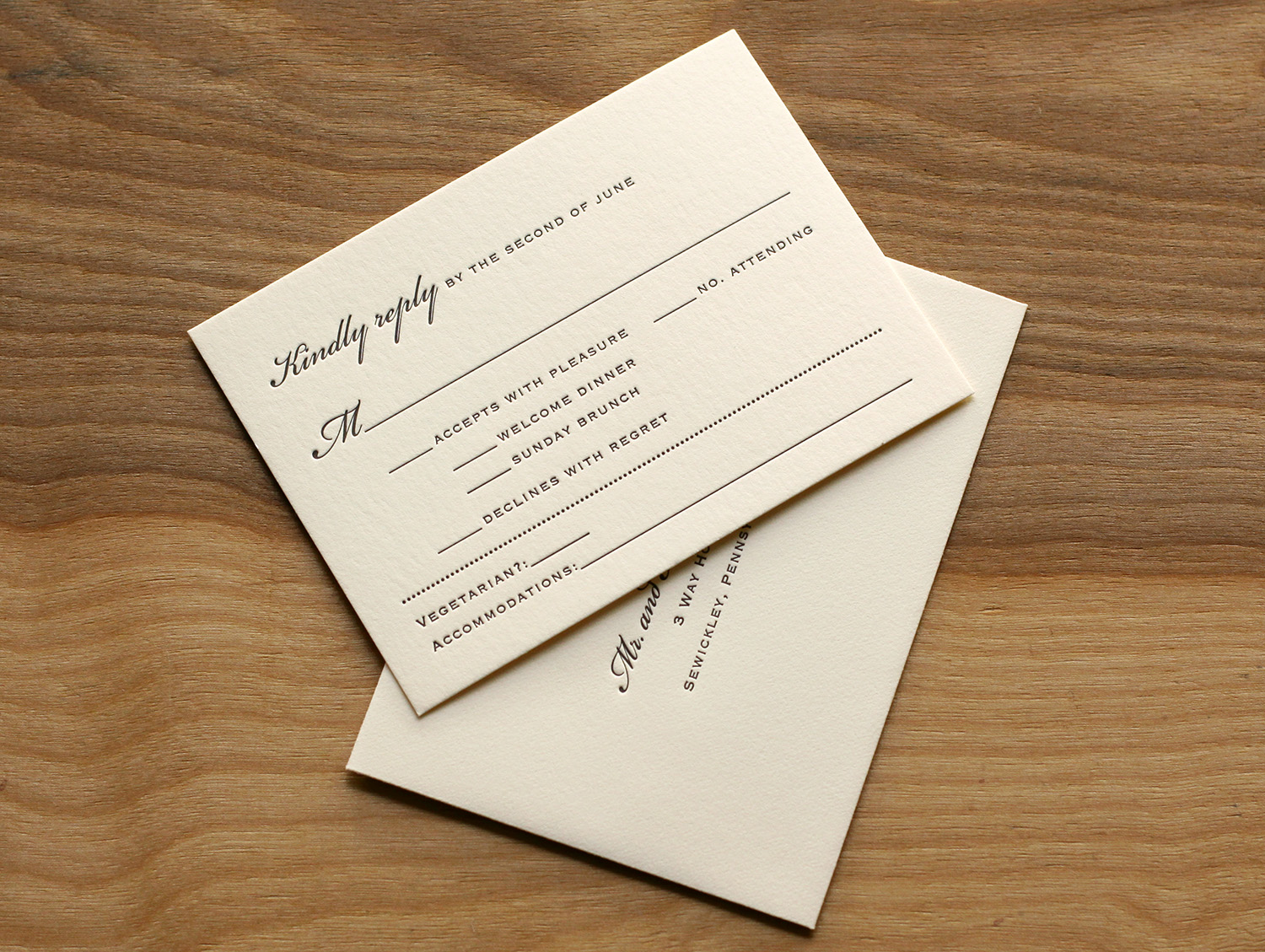
The set included a card inviting guests to the other events (a Friday night dinner and a Sunday brunch), and the RSVP card covered replies to these events as well as the wedding itself. It also had space to request a vegetarian menu and note lodging plans.

Laura became familiar with Travis' studio while she was at business school in nearby Chapel Hill. She was amazed by his work, and said that "selecting who to do my invitations was the easiest part of planning."  "Everyone loved the invitations," she said. "I got many compliments."

Photos by Sarah McCarty Arneson
Winter Wonder

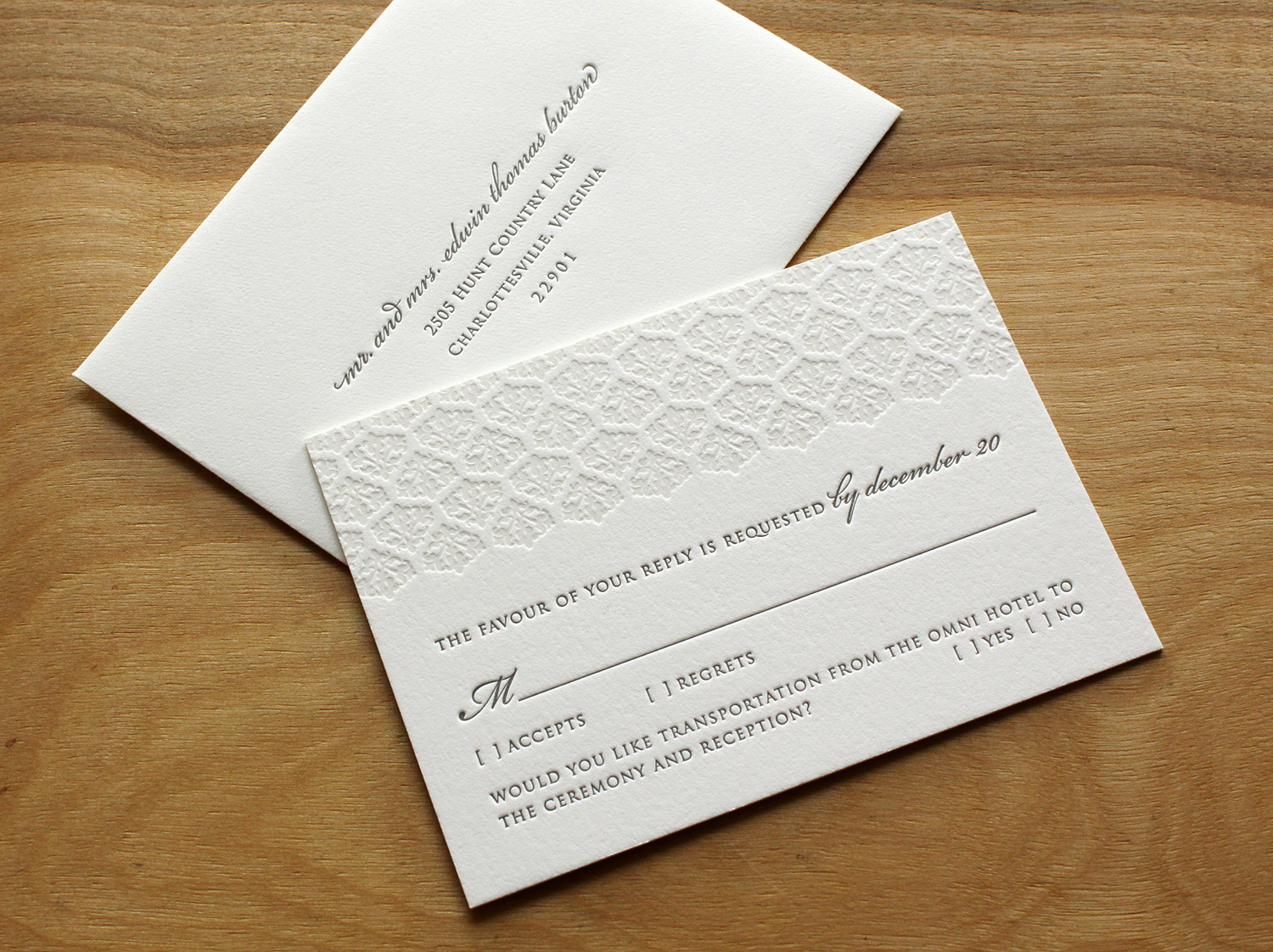
Trish Burton was helping her daughter plan a winter wedding, and was looking for winter-themed ​invitations. She was familiar with letterpress, as she had used it for her other daughter's wedding, but was unable to find any designs in her area that felt right. After finding Parklife Press and communicating with Travis, she had the idea to adapt the Pinkney design by using a tinted white ink instead of pink. Because the color of the white ink and the color of the paper are so similar, this look has the appearance of a blind deboss (an impression made without ink) but in fact it adds just enough color to make the texture pop. She predicted the change of ink color would make the springy, floral invitation convey a lush and dense snowfall instead. Quiet elegance, perfect for the winter-themed wedding in January.

​The text was done in slate — a cool gray ink that paired well with the pearl white paper stock — coordinating beautifully with the wedding's theme colors of icy blue and pewter.

The bride and groom, who each have stressful careers and work long hours, were grateful to have Trish make the arrangements. Trish, in turn, was eager to take away as much of her daughter's wedding-planning stress as possible. And her pursuit of a fitting winter-themed invitation for her daughter's happy day was successful — Trish said she lost count of the number of friends who complimented them.

Photos by Sarah McCarty Arneson
Letterpress and Halftone Screens

What prints best with letterpress? The short answer is: Text, line art, and fairly small areas of solid color.

A few typical examples...

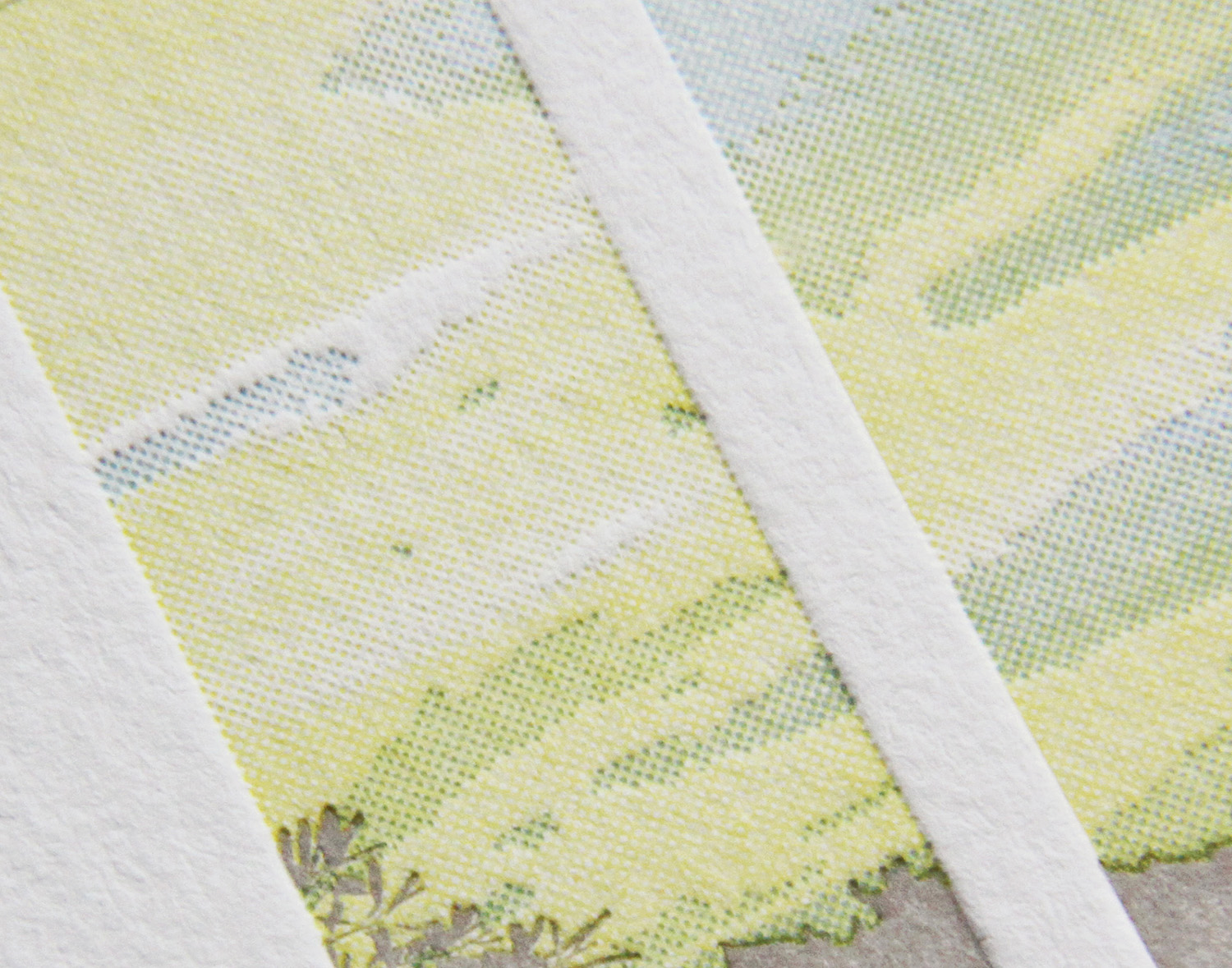
Does that mean you can't use tints of your chosen ink to create shading within one design? Or do color mixing of any kind? Not at all. It just requires a different kind of printing preparation: a halftone screen. This means taking artwork that has shading or gradations and converting it to a pattern of dots. The patterned screen allows the printer to mimic lighter shades of the same color, or to combine inks in layers to create the appearance of blended colors.

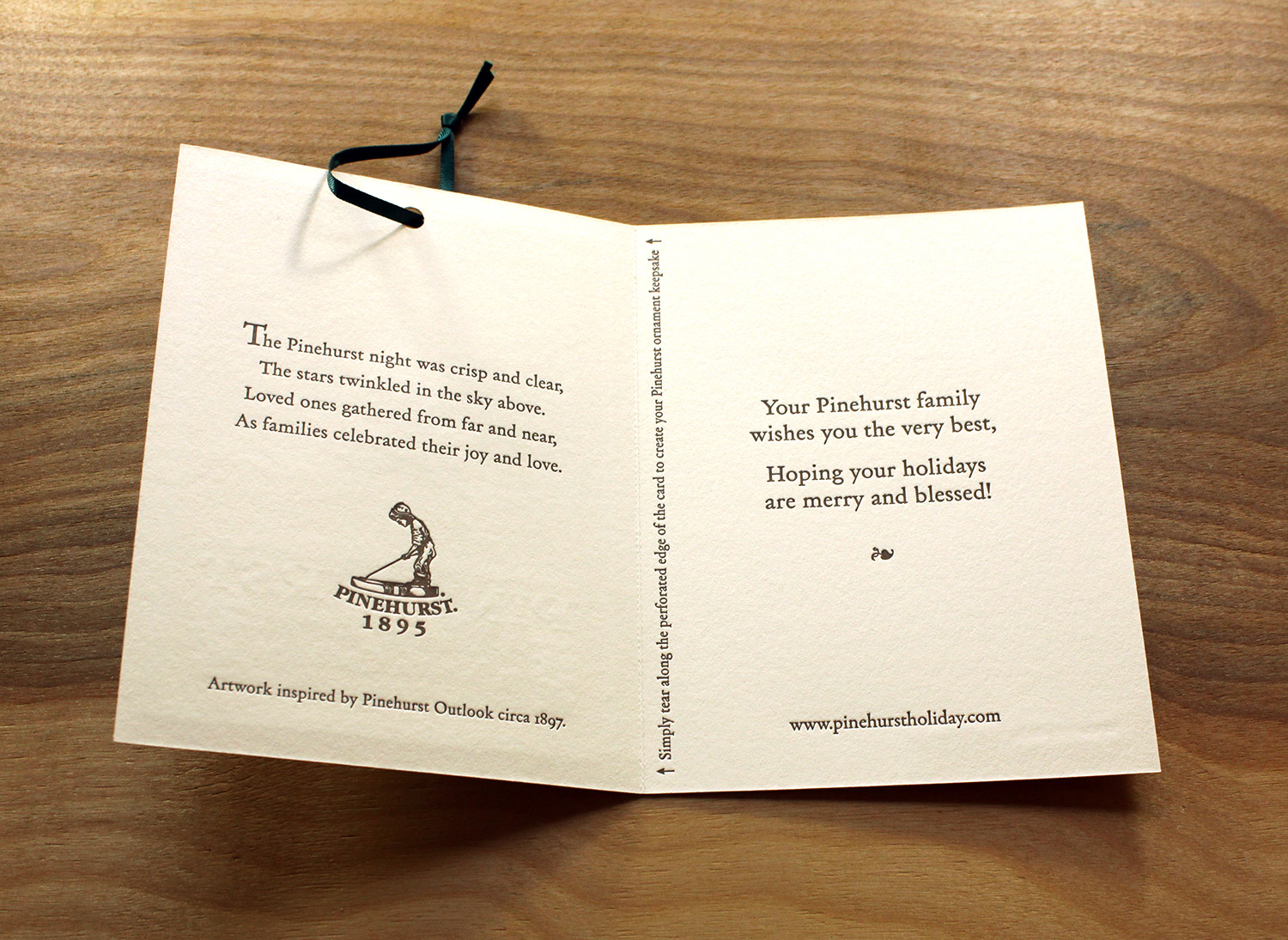
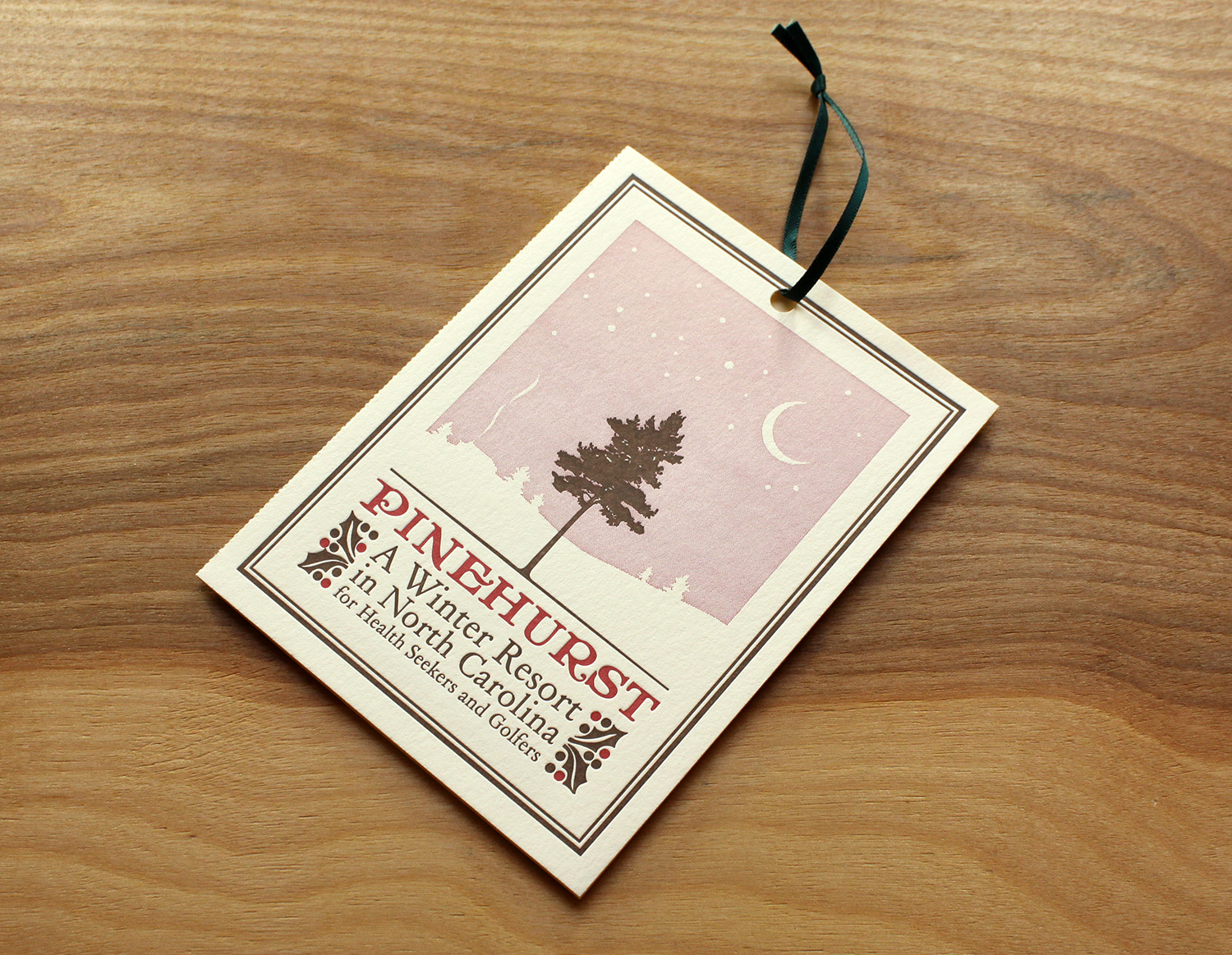
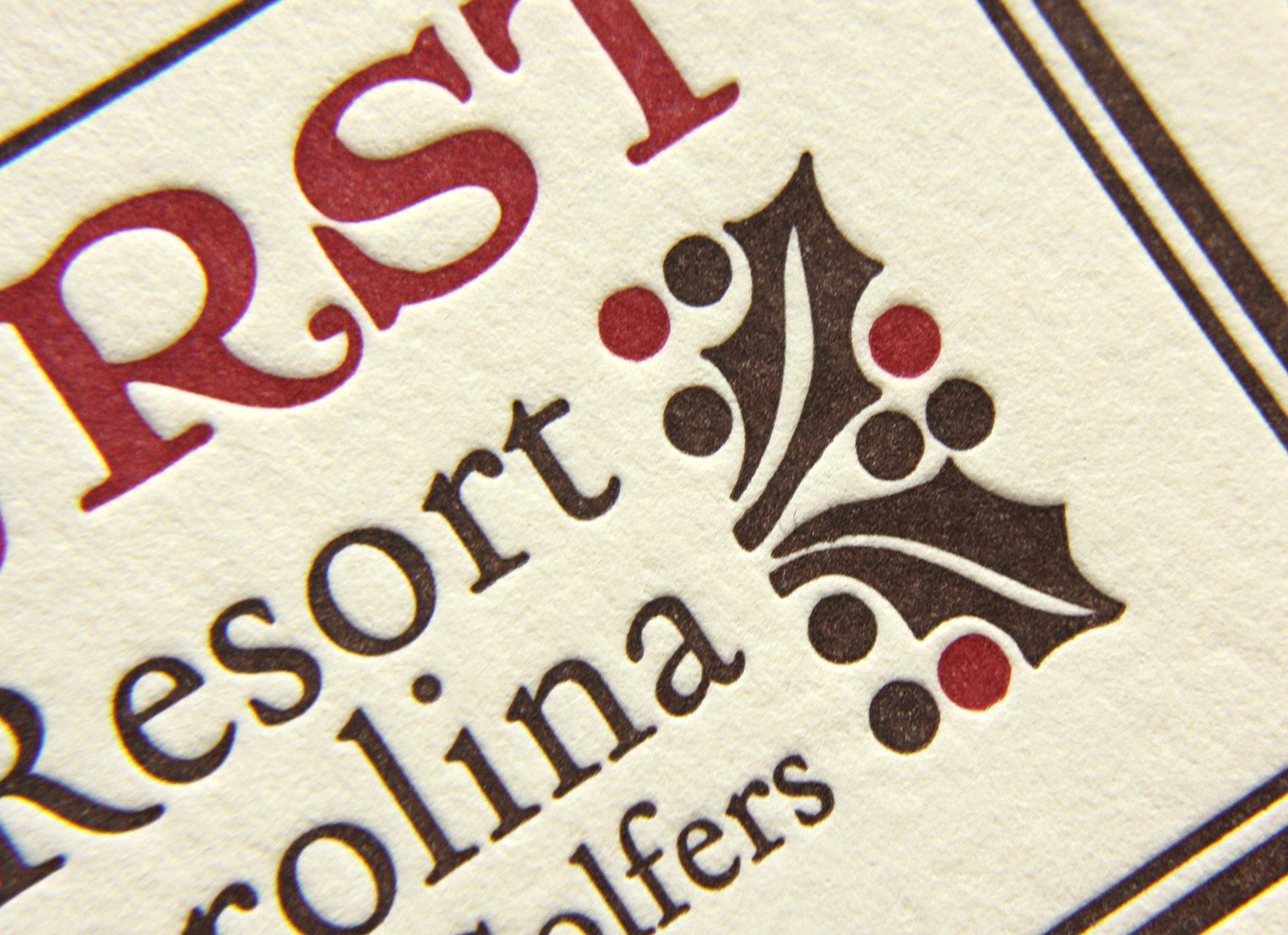
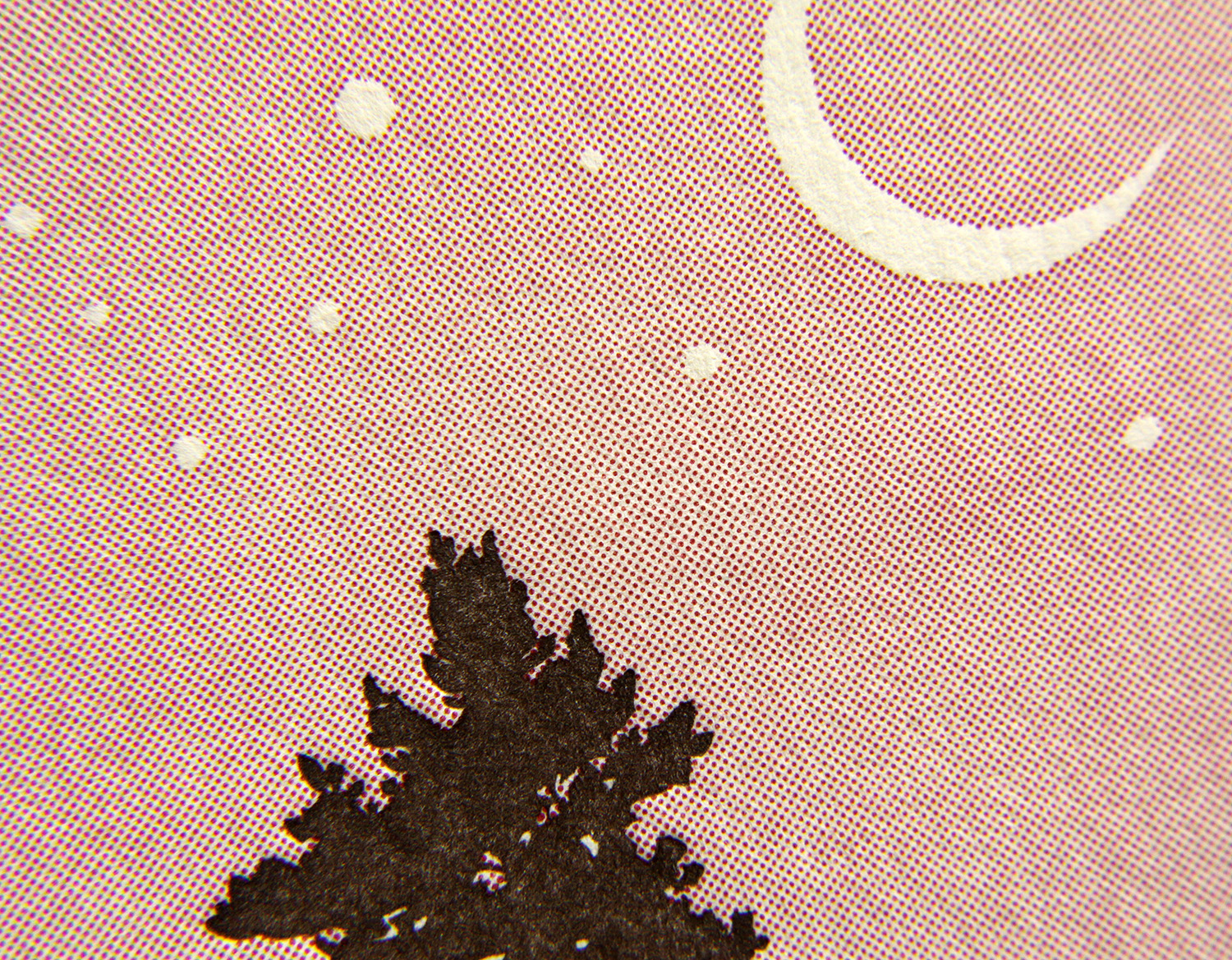
Below, brown and red inks are used for one of Pinehurst's Christmas cards, which is printed each year by Parklife Press. The two inks are used at 100% everywhere except the illustration's background, where a lighter shade of the red was needed to create a soft, peaceful night sky.​ We could have printed this as a third ink color, but it would have added to the cost.

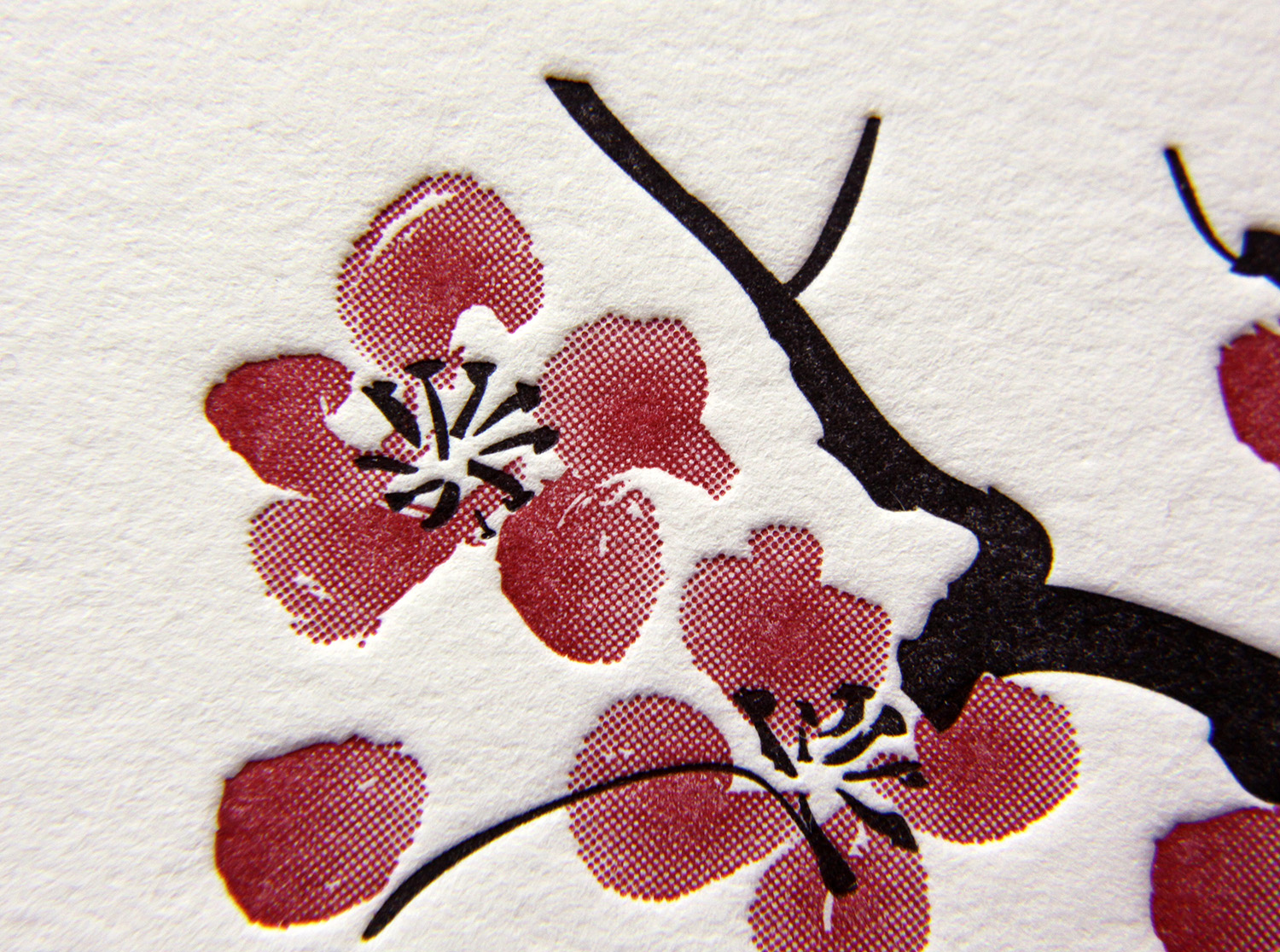
There are many different patterns of halftone screens, but the simplest is a grid of evenly spaced dots. Smaller dots are further away from each other (thus have more white space between them), creating the appearance of a lighter shade of the ink's full color. The dot size changes, but grid stays the same. So the larger the dot is, the closer to each other they appear … like cookies that melt into each other when placed too close together on a pan. The blank space between gets smaller and smaller, resulting in an overall darker appearance of color.
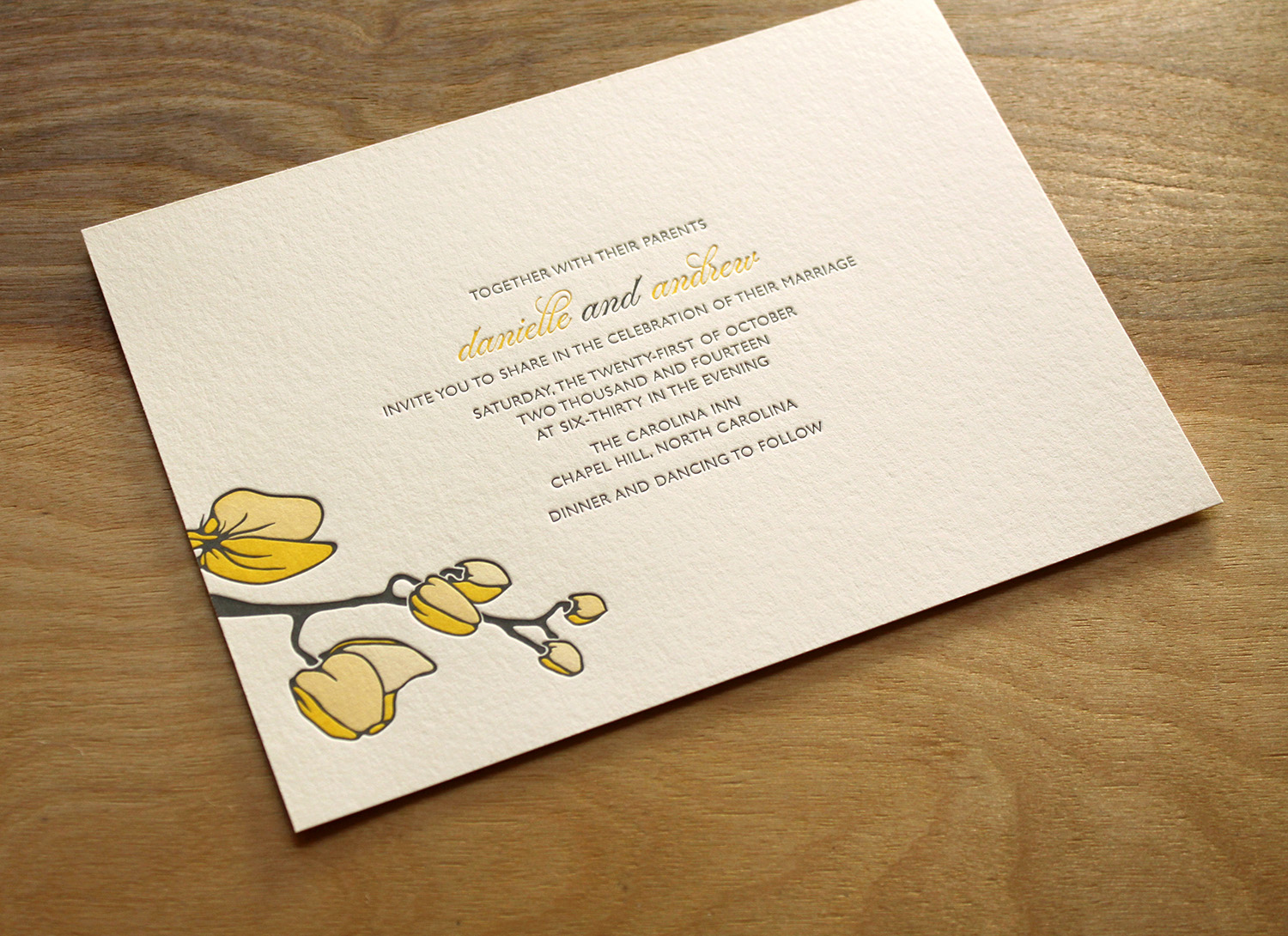
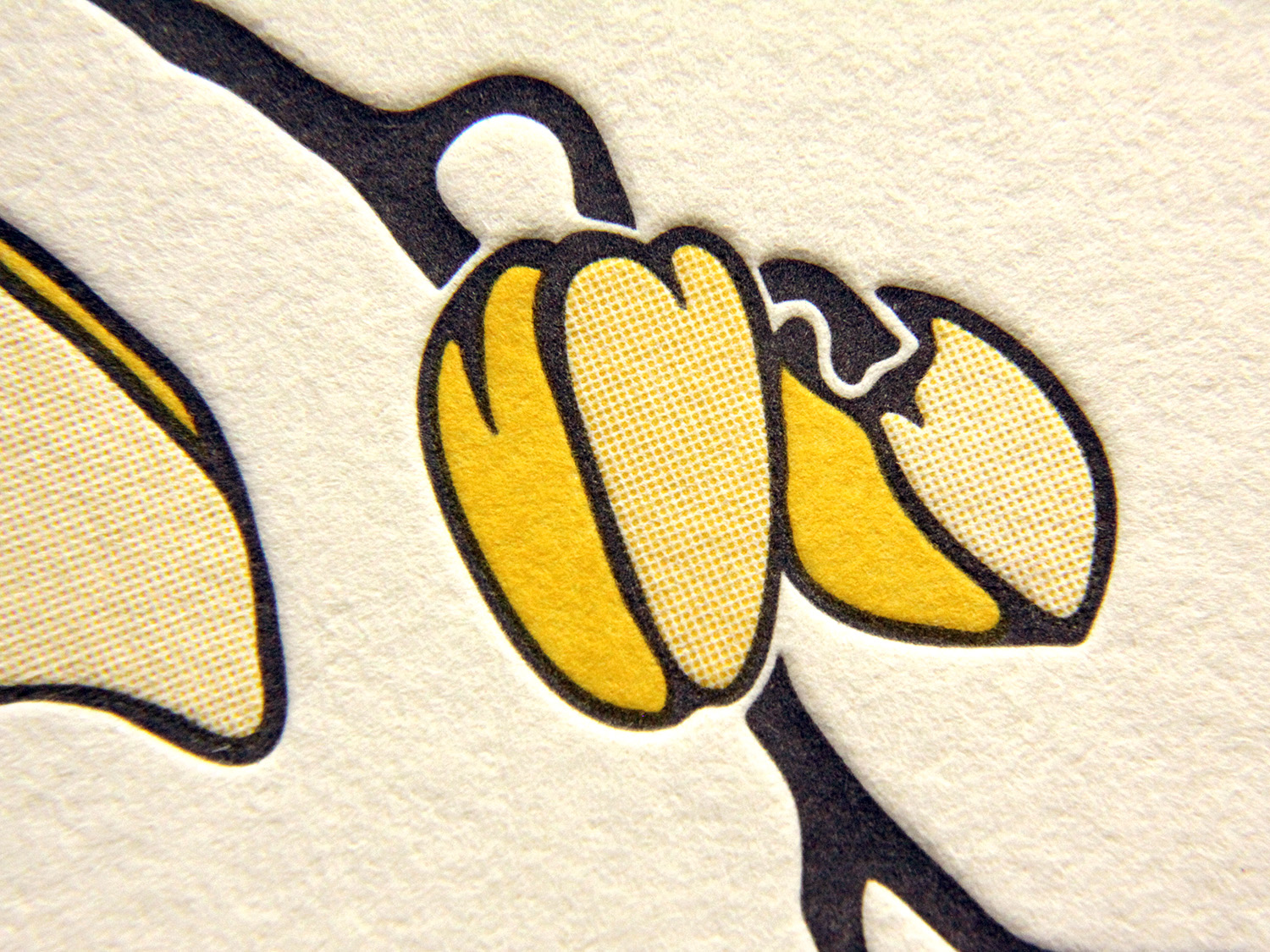
Our new Petal invitation (shown below) uses two inks — yellow and brown — but through halftone screens, it has the appearance of three shades of yellow. The shading gives the artwork a depth and a softness that wouldn't have been possible using only 100% yellow for the blooms.

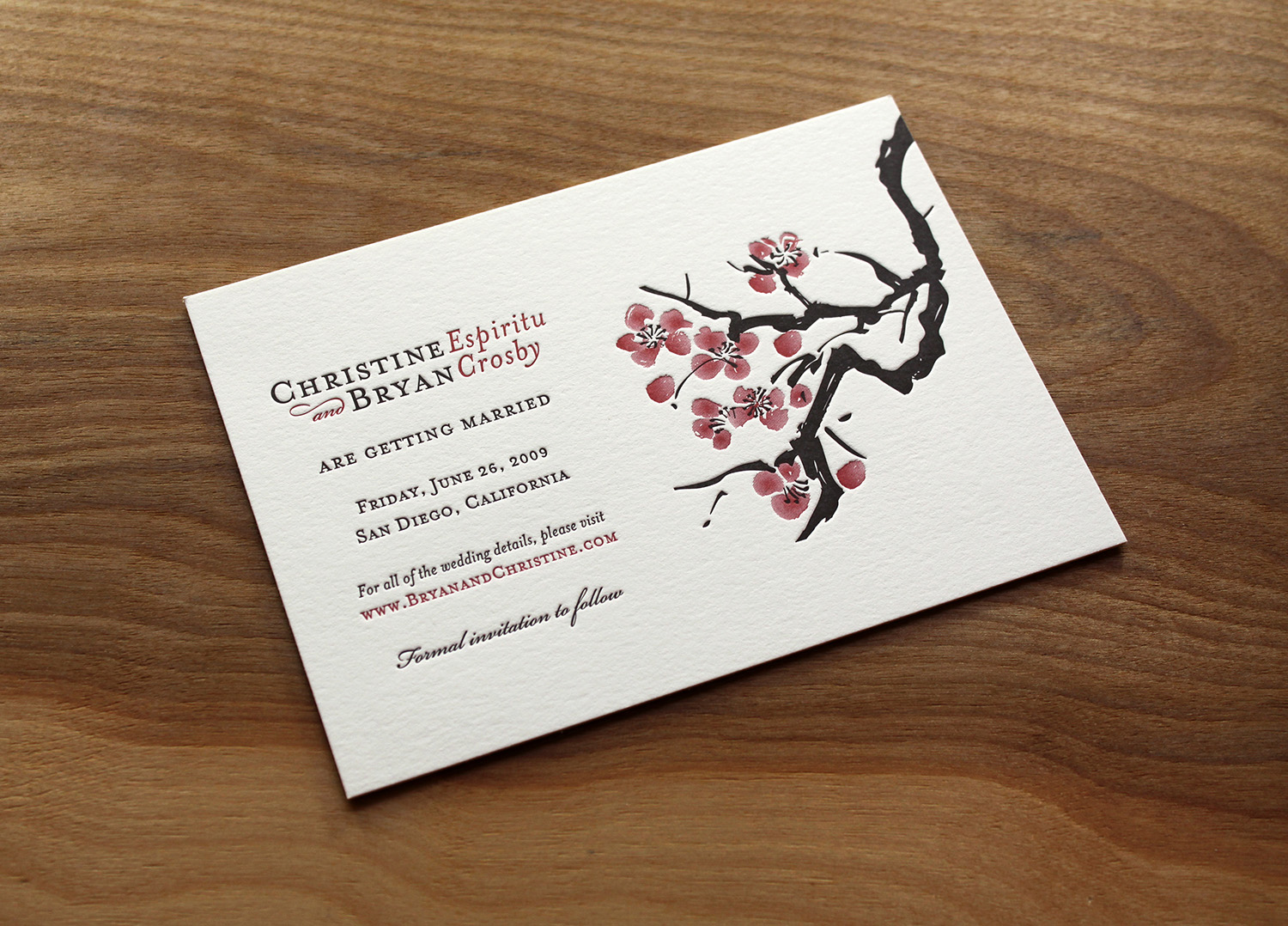
Likewise, this invitation set uses black and a deep red for the text, which looks striking together with the paper color. But the cherry blossom illustration would have lost something if it didn't show a range of pinks in the flowers' petals. 

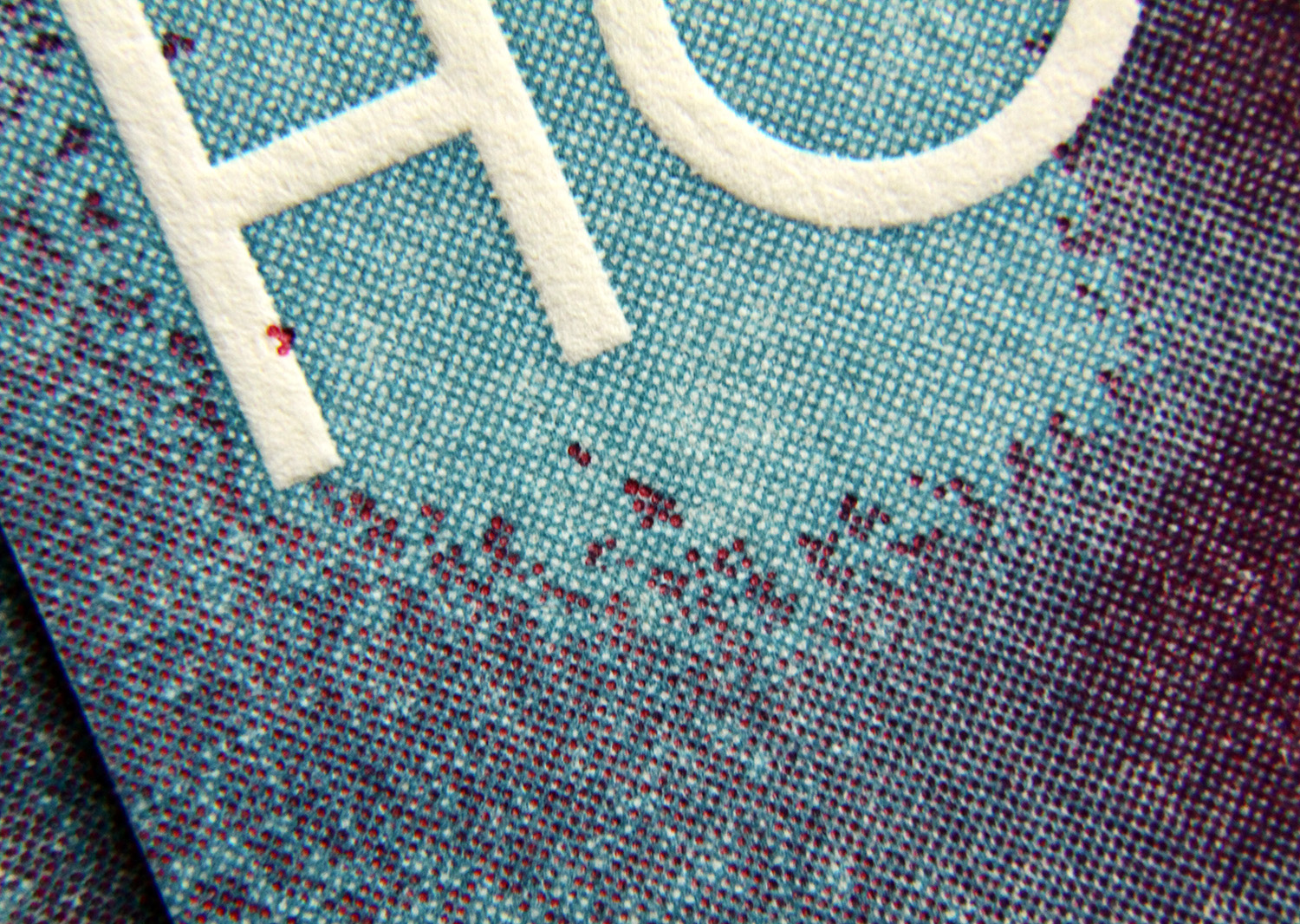
We all learned in grade school that mixing colors together creates new colors. Halftone screens don't actually mix the colors, but when layered on top of each other, they create the appearance of blended colors, so the artwork looks to have a greater color range than it actually does. It's like a technique used by Impressionist painters (and more specifically, pointillist painters) — laying down adjacent dabs of color, leaving the "mixing" to occur in the eye of the viewer.

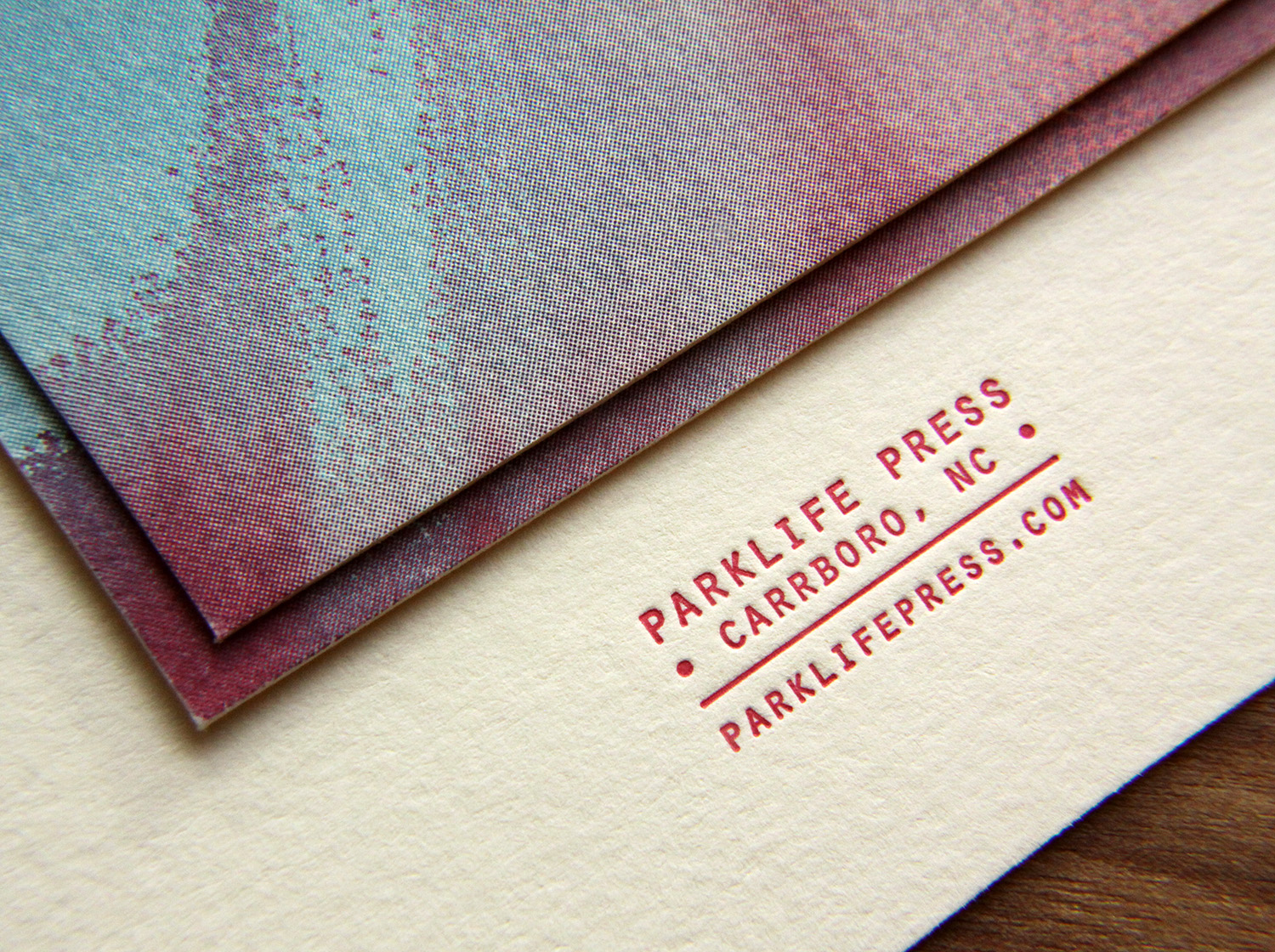
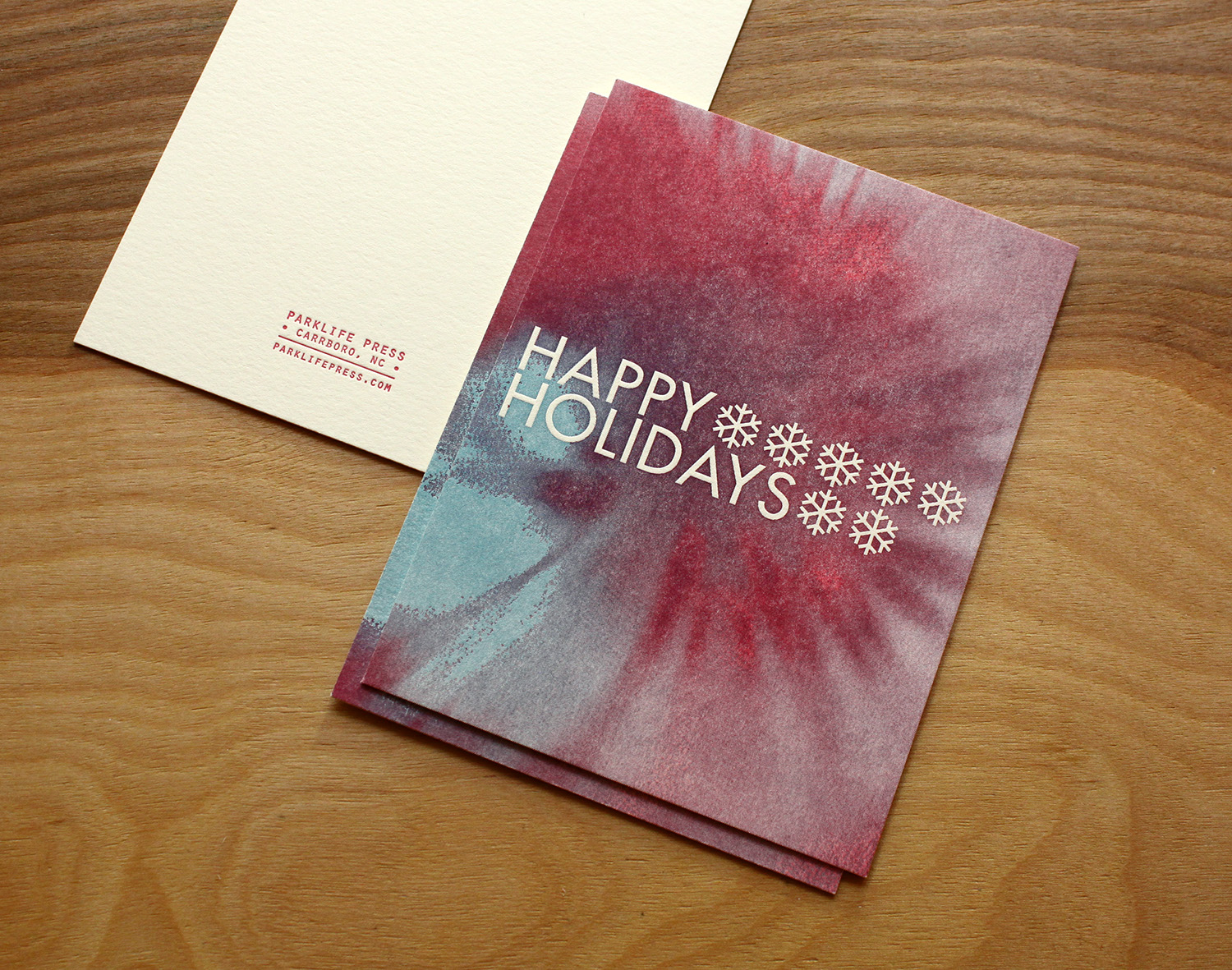
Below, blue and red ink screens create a swirl of blue, red and purple shades, suggesting a tie-dye effect.

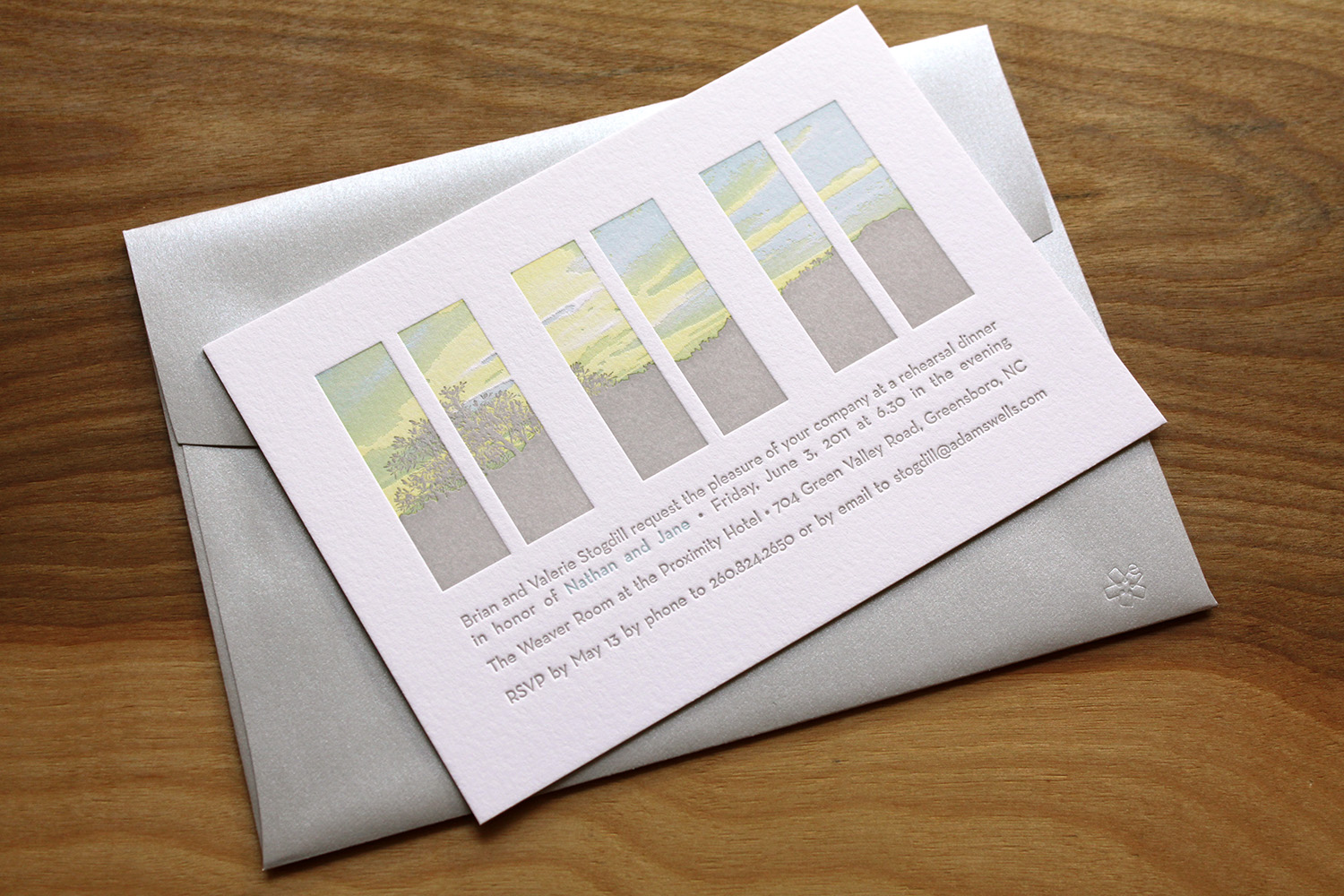
And below, a rehearsal dinner invitation with a windowpane illustration comes to life with just three inks. Using gray ink at 100% for the tree line, and blending the white background with screens of pale blue and yellow, the image captures the the hazy summer sky at twilight — perfect for the couple's evening event.

Letterpress printing was invented in the mid-15th century and remained the standard form of printing until the development of offset printing in the 20th century. Halftone screens came much later — the first successful commercial use wasn't until the 1880s. So while letterpress printing wasn't specifically designed to print shades and gradations of color, you shouldn't let that limit your vision. It can be done — and quite successfully — by incorporating halftone screens.

Photos by Sarah McCarty Arneson